🏗️How Social Robots Are Used Today

TLDR
- 👵 Elder Care & Loneliness: Robots like ElliQ and Hyodol are actively deployed to combat senior isolation and provide health reminders.
- 🎓 Classroom Tutors: Interactive robots serve as judgment-free peers for language learning and special education support.
- 🏥 Clinical Assistance: Healthcare facilities use “socially assistive” robots to lower patient stress and guide physical rehab.
- 🛎️ Public Spaces: Multilingual robot receptionists and guides are now handling thousands of daily customer queries in 2026.
- 📈 Economic Shift: The social robotics market is projected to reach $10.07 billion in 2026, driven by labor gaps in developed nations.
If you have ever spent time in a modern senior living facility or a forward-thinking school, you might have noticed a small, expressive machine rolling through the halls. It is a strange sight at first, but social robots have moved past the “cool demo” phase.
Today, they are actually working. They aren’t replacing people; they are filling gaps where consistent, patient, and interactive presence is needed most. I recently saw a companion unit in a local library helping kids find the science section. The way the children spoke to it was fascinating.
They weren’t just using a tool; they were interacting with a character. This shift from hardware to “personality” is what makes an AI companion feel human to the average user.
👵 Supporting Independence in Eldercare
One of the most documented social robots use cases 2026 is found in eldercare. With global labor shortages affecting care facilities, robots provide a vital secondary layer of support. These machines aren’t just there to look cute; they perform tasks like medication prompting, fall detection, and cognitive engagement through games.
In assisted-living homes, robots often lead group exercises or facilitate video calls. This technology is a primary reason why people are turning to AI companions to bridge the gap in human care. For instance, the robot Hyodol has already been distributed to over 12,000 seniors in South Korea to monitor wellness and combat isolation.
Major Robots in Elder Care (2026)
| Robot Model | Primary Function | Interaction Style | Deployment Scale |
| ElliQ | Isolation Prevention | Proactive / Conversational | NYC Public Programs |
| Hyodol | Health Monitoring | Tactile / Chatbot-based | 12,000+ Units (Global) |
| Paro | Dementia Therapy | Sensory / Animal-like | Global Care Facilities |
| Fourier GR-3 | Physical Support | Humanoid / Assistance | Pilot Healthcare Units |
For families, the benefit is often peace of mind. A robot doesn’t get tired of repeating the same information, which is a form of dignity for those struggling with memory issues. You can see how this plays out in real-world clinical studies where patients show measurable improvements in mood and social engagement when interacting with these systems.
🎓 Social Robots in Education and Healthcare
The application of social robotics today has a massive foothold in the classroom. Unlike a tablet, a social robot has a physical presence that commands attention. In primary education, robots act as “learning companions” that listen to children read or guide them through STEM problems.
Why Robots Excel in Specialized Settings:
- Zero Judgment: Robots provide infinite repetitions without showing frustration.
- Predictability: For students on the autism spectrum, a robot is a “safe” social partner with consistent cues.
- Active Learning: Physical movement keeps students focused longer than a static screen or app.
This physical interaction is a key part of social robots for people with disabilities, as it allows for social practice without the anxiety of human “failure.” In hospitals, robots also take on therapeutic roles. Pediatric wards use machines like Nao to explain medical procedures to children or play games during recovery. By mirroring a child’s emotions, these robots help lower stress levels, which can lead to better clinical outcomes. This is a clear example of emotion simulation vs. recognition being used for practical good.
🛎️ Public Spaces and Customer Service
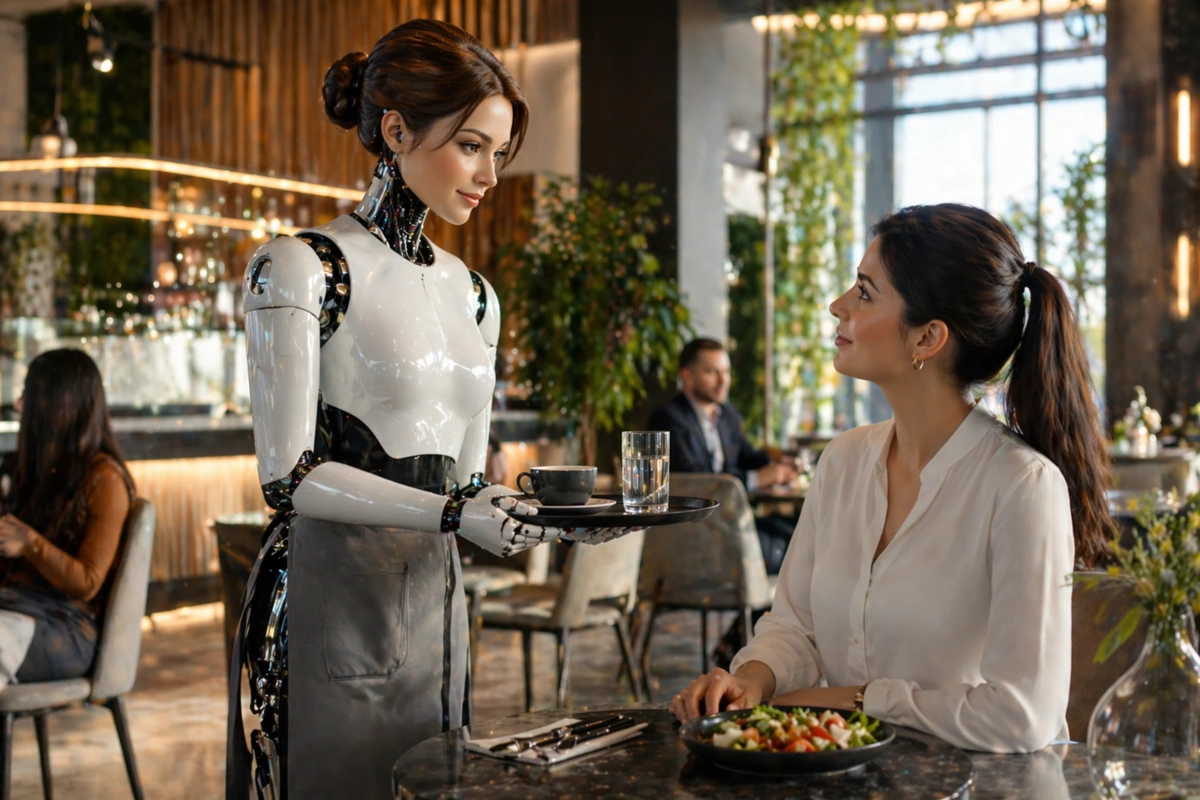
If you travel frequently, you have likely seen interactive robots in public spaces. From airport terminals to hotel lobbies, social robots for customer service are becoming common front-desk assistants.
They handle the “dull and repetitive” side of hospitality: giving directions, checking guests in, or answering FAQs in dozens of languages instantly.
These robots are designed for high-traffic environments where human staff might be overwhelmed. For example, robots are being used to reduce wait times and guide visitors in major malls and international airports. While some see this as a loss of the “human touch,” most people find it incredibly efficient to get instant, multilingual help.
💡 Pro Tip: If you see a service robot in a lobby, look for an LED ring on its chest. Green usually means it is actively listening for a wake word or gesture to begin an interaction.
🏗️ Real-World Examples of Social Robots
When we look at real-world examples of social robots, we see a divide between purely social companions and those with a functional “body.” Some look like pets, providing the psychological benefits of animal therapy without the maintenance.
This is a major factor in the loneliness-AI connection where the robot provides a “presence” that fills a quiet home.
Others are humanoid, designed to navigate environments built for people. The commercial use of social robots is also expanding into retail, where they greet customers and suggest products. This helps brands create a high-tech image while gathering data on customer preferences, which is part of how companies monetize AI companionship today.
Trends in Social Robotics (2026)
- Language Tutoring: Robots are increasingly being used as live conversational tutors for ESL students.
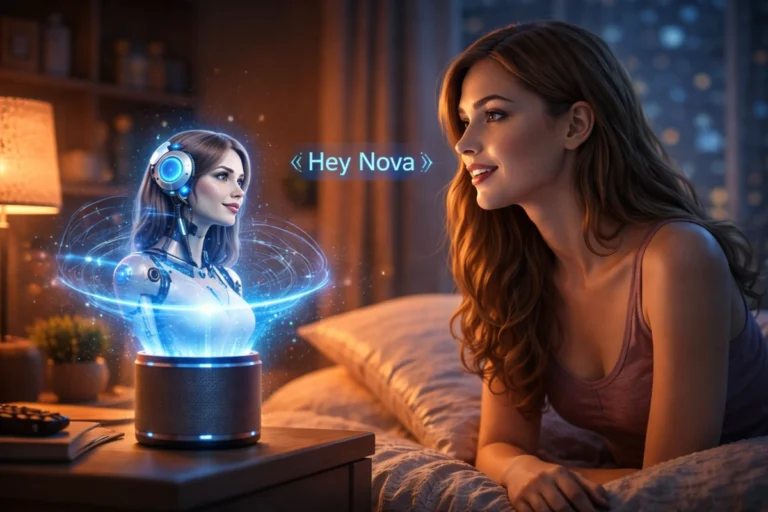
- Home Automation: Social robots are acting as the “face” of smart homes, moving away from static voice speakers.
- Physical AI: We are shifting from laboratory curiosity to “productive infrastructure” according to recent robotics industry updates.
🧠 The Psychology of Long-Term Interaction
One of the most interesting things about how are companion robots used is what happens after the novelty wears off. In research pilots, families who have a robot for several months often stop seeing it as a machine and start treating it as a “presence” in the home.
They might say “good morning” to it or feel a sense of loss if the unit is taken away.
This isn’t because people are being “tricked.” It is because our brains are wired to respond to social cues like eye contact and voice inflection.
Understanding why people form emotional attachments to AI is crucial for the ethics of human-AI companionship. As we integrate these machines into our lives, we must ensure they supplement human connection rather than replace it.
Read Also: Can AI companions reduce loneliness long-term?
🚩 Current Technical and Social Barriers
Despite the progress, we aren’t quite at the “Jetsons” level yet. Robots still struggle with “unstructured” environments—like a messy living room or a loud, crowded party. This is one of the main things what current AI companions are not capable of doing perfectly.
There is also the question of social acceptance of AI companions. In some cultures, a robot in the classroom is a welcome assistant; in others, it is viewed with skepticism. Privacy is the biggest hurdle. Users are rightfully concerned about how AI companions store and use your data, leading to a major push in 2026 for local vs. cloud-based AI.
🏁 Conclusion
Social robots are no longer just a curiosity. They are active participants in our social infrastructure. From the social robots in education and healthcare helping our children and seniors, to the interactive robots in public spaces guiding us through cities, they fill a vital role.
What I find most promising is that we are moving toward what are companion robots: machines that assist, entertain, and provide a consistent presence. As the technology matures, the focus will shift from if we use them, to how we can design them to be more empathetic members of our society.