
🤖Why Companion Robots Break Down in Unstructured Settings
Companion robots perform best in controlled environments but struggle when faced with unpredictable real-world situations.

Companion robots perform best in controlled environments but struggle when faced with unpredictable real-world situations.

Wonder why robots struggle in the real world? Because life is messy in ways that are hard to model.

Edge computing allows AI companions to process tasks locally, reducing delays and making conversations feel more natural.

Identifying the features that matter in AI companions requires moving past the marketing hype.

AI companions process large volumes of personal conversations, raising important questions about how that data is stored and used.

What makes a robot seem socially aware is not necessarily intelligence in the dramatic, science-fiction sense.

Latency sits quietly at the center of real-time AI interaction.
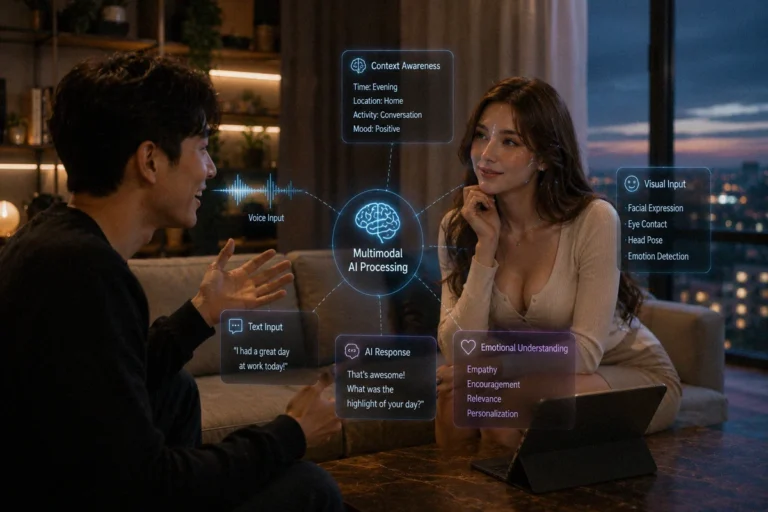
One of the biggest reasons companion technologies are becoming noticeably more natural is multimodal AI in companions.

Understanding why making a social robot is hard requires looking past the plastic shell at the behind the scenes of AI hardware.

Memory systems determine whether an AI feels stable or changes personality across interactions.