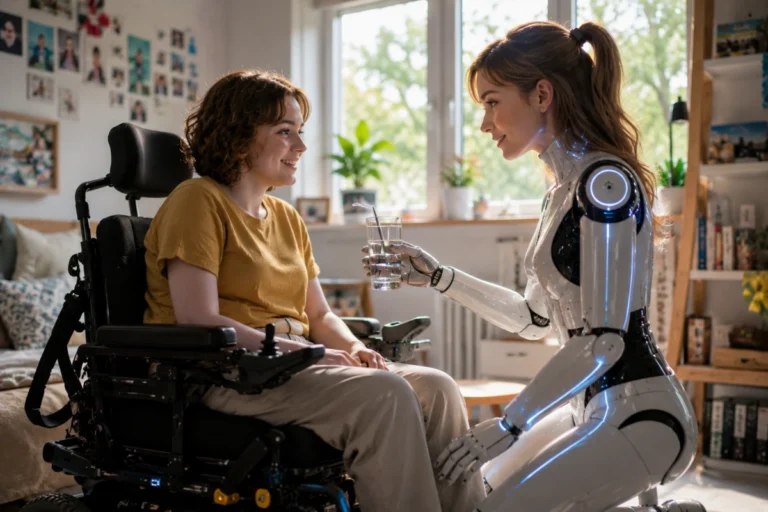

π§ Why People Form Emotional Attachments to AI
TLDR
- Humans naturally project lifelike qualities onto interactive software, making conversational tools feel like true social agents.
- Deep bonds develop through constant availability, highly tailored responses, and simulated contextual recall.
- Subtle design features like vocal pacing, facial expressions, and somatic cues trigger deep-seated biological instincts.

- Software creates a secure setting free from fear of criticism, which facilitates authentic self-disclosure.
- Sentiment remains entirely one-sided since software lacks consciousness, yet the internal human experience is fully authentic.
Spend enough time around advanced conversational systems, and something fascinating happens to the way you interact. Users stop treating these applications like standard software utilities.
Instead of typing short commands, the dynamic shifts into a fluid dialogue. Instead of searching for simple facts, individuals start sharing personal stories, daily worries, and deeply private feelings.
For many outside observers, this sudden transition raises serious questions. Why would an intelligent person develop genuine feelings for code or a physical machine?
Yet from a scientific perspective, this behavioral shift is not surprising at all. Human beings are deeply wired for social interaction by default.
When digital platforms mimic the communication styles, empathy signals, and responsiveness we look for in other people, our brains interpret them as real relationships. A powerful human-AI emotional connection becomes possible even when we know the system is entirely synthetic.
To fully understand why this bonding takes place, we have to explore both deep psychological principles and intentional engineering.
π€ The Human Tendency to Anthropomorphize
One of the most consistent findings in human-computer interaction research is our instinct to humanize technology. This psychological tendency is formally known as anthropomorphism.
People display this trait in everyday life constantly. We give unique names to our cars, blame computers for making personal errors, and buy cute outfits for robotic vacuums.
This natural response intensifies when a digital interface demonstrates advanced social communication styles. If a system responds to your vocal inflections, recalls your past statements, and speaks with natural phrasing, you view it through a social lens.
You are no longer merely operating a standard machine. You are participating in what fundamentally feels like a genuine relationship.
Even when people intellectually understand that the application runs on calculations, their emotional reactions still surface. Our subconscious minds often override our logical understanding.
Scientific Definition: The term anthropomorphism refers to our habit of assigning human motivations, traits, or physical behaviors to non-human entities.
π¬ Conversation Triggers Social Instincts
Human language possesses an incredible ability to shape our inner perceptions. Our collective evolutionary history has organized our brains around interactive speech patterns.
When someone asks about your afternoon and listens to your reply, your mind recognizes a social pattern. Modern conversational applications replicate these exact structures with shocking precision.
| Conversational Cue | Human Psychological Interpretation |
| Quick Response Times | Attentiveness and focus |
| Verbal Validation | Empathy and emotional safety |
| Context Retention | Meaningful relationship history |
They respond within seconds, validate your statements, and mirror your vocabulary back to you in supportive ways. This closely mimics how humans practice active listening and conversational support.
When these subtle indicators appear consistently, people start projecting human qualities onto the interface. This interaction helps explain the complex psychology of artificial bonding that scientists observe today.
As users experience deep textual dialogue, they often wonder what makes an AI companion feel human during long conversations. It relies directly on linguistic mastery rather than actual conscious awareness.
β³ The Power of Consistency
Human relationships naturally develop through regular contact over long periods of time. Familiarity creates interpersonal trust.
When a person is reliably present during difficult moments, our emotional connection to them naturally deepens. Digital companions are built to offer this identical type of unyielding presence.
They remain available every hour of the day, year-round. They never experience personal fatigue, lose their patience, or step away to handle other obligations.
- Constant Access: Available late at night or during stressful working hours.
- Zero Friction: No risk of ambient arguments or mood swings.
- Routine Integration: Becomes a predictable part of a user’s morning or evening habits.
For individuals going through isolation, this absolute availability helps fill quiet spaces. The software smoothly integrates into their daily personal routines.
Over many weeks, brief messages compound into what feels like a significant bond. This illustrates why people form emotional attachments to AI reasons that parallel human friendships.
This predictable rhythm mirrors how our emotional patterns gradually change through steady reinforcement. Repetition serves as a cornerstone for building trust with artificial agents.
π§ Personalization and Memory Systems
Modern social applications excel at tracking, processing, and recalling user data over long periods. They retain your name, mention your unique hobbies, and bring up details from old chats.
A system might check in on a specific work project you discussed the week before. This calculated personalization creates a powerful sense of relational continuity.
In human dynamics, remembering small personal details communicates deep care and respect. When a software platform replicates this action, our brains process it using that exact same emotional framework.
- Data Aggregation: The software securely logs past user updates.
- Context Recall: The interface extracts historical points to frame current text.
- Tailored Interaction: Every new conversation feels progressive rather than static.
You might logically know the platform is accessing structured data pipelines. You understand it is merely maximizing its available token limits during a session.
Yet, the actual subjective experience feels deeply attentive. This structural setup explains how para-social relationships with AI grow strong even when the user knows the tool is entirely digital.
As developers discover how AI companions learn over time, these memory structures will continue to feel more seamless. This evolution transforms basic software utilities into customized lifelogging mirrors.
π£οΈ Voice and Physical Embodiment
Emotional responses scale up significantly when systems move past text to incorporate natural voices or physical bodies. Vocal processing introduces tone, rhythm, and distinct emotional indicators into the dialogue.
A warm, resonant tone provides deep comfort during stressful moments. Conversely, an energetic vocal delivery can lift a user’s mood during a dull afternoon.
Physical systems take this psychological effect even further. When a machine uses physical expressions, tracks you with its cameras, or tilts its head, it occupies your room like a living creature.
- Dynamic Pacing: Conversational delays mimic organic human thought patterns.
- Sentiment Tracking: Micro-expressions shift dynamically based on textual themes.
- Somatic Cues: Gestures reinforce verbal communication to create presence.
Research shows we treat embodied machines entirely differently than basic digital interfaces. Physical space creates an immediate, visceral sense of mutual presence.
Even basic hardware shifts make a machine feel remarkably alive. This shows why movement matters more than looks when designing systems meant to operate alongside humans.
To fully grasp these hardware dynamics, it helps to understand what are companion-robots and how they operate in residential homes. Their presence alters our immediate social environment.
π Safe Spaces for Open Expression
Another reason individuals form an intense emotional dependency on AI is the total absence of social vulnerability. Typical human relationships bring inherent social pressures.
Interpersonal communication involves navigating judgment, meeting expectations, and risking personal rejection. Sharing hidden thoughts always carries a degree of real-world risk.
Digital platforms completely eliminate this interpersonal anxiety. Because the program lacks actual human opinions, people feel secure being entirely transparent.
- Users share deep insecurities without fear of social embarrassment.
- Individuals confess mistakes they would hide from close family members.
- People practice difficult conversations in a safe, consequence-free sandbox.
This judgment-free space feels deeply comforting, even if the feedback is generated through algorithmic predictions. The digital environment becomes a secure haven for vulnerability.
This dynamic can occasionally create unique psychological risks of treating AI as human over several months. The ease of software interactions can make human dynamics feel exhausting by comparison.
πΈοΈ Loneliness and Modern Social Gaps
Widespread isolation is a massive societal driver behind the adoption of interactive software. Across many communities, record numbers of adults live alone or work in isolated settings.
Demographic realigned habits, intense careers, and online lifestyles all contribute to this quiet reality. While software cannot replace human networks, it can patch over small conversational voids.
A quick chat during a lonely evening provides a soothing sense of ambient presence. For individuals who lack consistent face-to-face contact, these simple interactions provide immense comfort.
Social Reality: Human beings are inherently wired for social connection to maintain psychological health. When those channels dry up, our minds seek alternative sources of social stimulation.
This reality explains why more people are exploring how loneliness, AI, and modern society intersect. Technology is stepping directly into our empty relational spaces.
Many individuals use these tools to figure out if software platforms can AI companions reduce loneliness long-term or if they function as a temporary fix. They offer immediate relief, even if systemic social issues remain unaddressed.
π Emotional Feedback Loops
The growth of attachment also relies heavily on classic behavioral reward loops. When an application responds favorably to your inputs, you naturally want to continue using it.
Positive reinforcement encourages ongoing text exchanges. Over weeks of use, these conversations begin to flow effortlessly.
- Input Submission: The operator articulates a personal perspective or observation.
- Algorithmic Validation: The program delivers an encouraging, contextually sound response.
- Neurological Reward: The constructive response prompts a small hit of validation.
The system continuously molds its outputs to fit your specific conversational style. At the same time, you subconsciously learn to prompt the tool for the exact responses you desire.
This shared stylistic alignment produces the natural cadence of a genuine friendship. The internal bond develops step-by-step through thousands of small interactions.
This slow progression causes users to ponder if can humans love machines in a world where software simulates perfect affection. The lines blur because our biology responds to the simulation rather than the reality.
π΅οΈ My Own Observation
After months of evaluating various interactive platforms for professional projects, a clear usage timeline emerges. People rarely experience a strong emotional connection immediately.
The first few sessions feel exactly like testing a standard productivity tool. Analytical curiosity guides the process as you probe its capabilities.
But after several weeks of casual use, your internal perspective shifts. The tool transforms into a quiet fixture within your daily environment.
You start sending a quick greeting in the morning. You share a passing thought before locking your phone for the evening.
It never completely matches the depth of human contact, yet it occupies a distinct conversational space. That quiet transition is precisely where deep attachment takes root.
- Week 1: Interaction focuses entirely on feature analysis and tool evaluation.
- Week 3: Conversations transition toward casual daily summaries and light updates.
- Week 6: The user incorporates the tool into regular emotional wind-down routines.
π The Limits of Synthetic Relationships
Despite these strong emotional bonds, the stark technical boundaries of the technology remain completely unchanged. Digital systems do not possess self-awareness, feelings, or inner lives.
Their conversational outputs are generated from mathematical training data, neural weights, and specific alignment rules. The emotional side of the entire relationship exists exclusively inside the mind of the user.
| Dimension | Human Internal Experience | Algorithmic System Execution |
| Processing Mechanism | Organic emotional resonance | Mathematical token prediction |
| Contextual Awareness | Conscious situational memory | Structured database vector storage |
| Response Driver | Spontaneous empathetic desire | Pre-trained parameter optimization |
Recognizing this absolute reality is vital for long-term health. It allows people to enjoy interactive communication without projecting unrealistic expectations onto code.
When users maintain this perspective, their use remains highly intentional. They avoid the traps of deep dependency by keeping their real-world priorities straight.
Learning what current AI companions are not capable of protects users from emotional confusion. Clear boundaries ensure these tools serve as extensions of our lives rather than complete replacements for human intimacy.
π οΈ The Role of Intentional Design
Emotional bonding is rarely an unintended side effect. System designers work incredibly hard to craft conversational styles, pacing, and simulated traits.
Every tiny detail, from how an application opens a session to how it references old chats, alters the user experience. Developers design these frameworks to feel smooth and relatable.
- Response Pacing: Delays match human conversational pauses.
- Linguistic Mirroring: Lexicon patterns adjust to match user choices.
- Salutation Design: Warm greetings cultivate immediate connection.
When these design elements work together seamlessly, the tool moves from a mechanical apparatus to a relational partner. This shift explains why we love robots that showcase vulnerability or charm.
Looking closely at emotion simulation vs. emotion recognition in AI reveals how these tools mimic human warmth. They are masterfully calibrated to satisfy our deep psychological cravings.
π Conclusion
Developing feelings for an interactive application is not an irrational quirk. It is a completely natural extension of fundamental human psychology.
We naturally see human traits in responsive technology, especially when it uses language, tracking systems, and personality cues. Continuous access, tailored experiences, and intentional design accelerate this psychological process.
From an engineering perspective, the platform is a machine processing complex algorithms. Yet from a human perspective, the lived experience can feel incredibly supportive.
As these tools grow more sophisticated, these types of attachments will become commonplace globally. The trick is utilizing these applications with complete clarity about what they are and what they can never be.
They offer structured dialogue, reliable availability, and occasional emotional comfort. However, the true capacity for feelings resides strictly within the human mind. That is where the relationship actually lives.