
🧪The Psychology Behind Human–Machine Bonding

TLDR
- Humans form emotional attachments to machines through psychological mechanisms similar to attachment theory.
- Attributing humanlike qualities to machines makes social interaction feel meaningful, even if the machine lacks real emotion.
- Empathy, perceived responsiveness, and shared experiences play key roles in shaping bond-like responses.
- People may turn to technology for emotional support when human social networks are limited.
- These psychological connections are real but distinct from genuine human relationships.
Have you ever felt strangely comforted by talking to a gadget or digital character that “gets” you? Maybe a chatbot remembered something personal you shared, or a robot that took on a playful personality made you smile after a long day. That sense of connection is not just a fluke. It is deeply rooted in the psychology of human-machine bonding.
Even though machines do not feel emotions in the way people do, our minds are remarkably adept at projecting social meaning onto interactive partners. This explains why we bond with robots and how we navigate the complex landscape of artificial companionship.
As we integrate these systems into our homes, understanding the mental shift from using a tool to interacting with a partner becomes essential.
👥 Why Humans Attribute Social Qualities to Non-Human Agents
Human beings evolved to be social. We read faces, gestures, tones of voice, and expressions to understand others quickly and instinctively. That instinct does not turn off when the partner is not another human; it simply applies broadly to patterns that resemble social partners.
This is often explained by the media equation theory in AI, which suggests people treat computers and other media like real people and places.
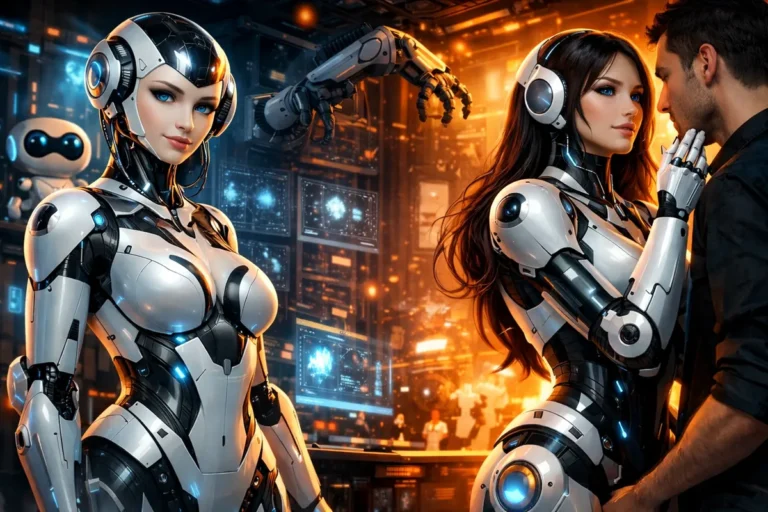
This behavior is a core part of why humans anthropomorphize machines, which is the tendency to attribute humanlike qualities to objects. When machines communicate faster or respond reliably, we treat them socially. This is a primary driver in what makes an AI companion feel human during daily interactions.
By using natural language processing, these systems mimic the conversational dance that our brains identify as “human.”
Factors That Trigger Social Attribution
- Responsive Mimicry: The system mirrors user tone or language style to create rapport.
- Consistency: Predictable behavior patterns that suggest a stable personality.
- Physical Presence: In robots, eye contact or movement that mimics life.
When these factors align, the human-robot interaction (HRI) psychology shifts. We stop seeing the code and start seeing the persona, leading to a sense of presence that can feel as real as a phone call with a friend.
📎 The Role of Attachment-Like Dynamics
One of the most illuminating lenses scientists use to understand these bonds comes from attachment theory and AI. This framework was originally developed to describe bonds between infants and caregivers, but it fits surprisingly well in the digital age.
It suggests that humans look for a “secure base” in their social partners. This means we seek out someone, or something, that provides safety and comfort.
Recent research has found that seeking comfort and security can emerge even when the partner is a machine. In fact, users often display attachment-related tendencies toward social robots used today, highlighting dimensions like attachment anxiety or avoidance. While AI companions vs traditional robotics differ in their goals, the human psychological response remains consistent.
Stages of Digital Attachment
- Initial Proximity Seeking: Users frequently check in with the AI for validation.
- Safe Haven Effects: Turning to the device during times of high stress or anxiety.
- Secure Base Behavior: Using the AI as a support system to gain confidence for real-world tasks.
When a user perceives an AI as a secure base, they feel more comfortable exploring their thoughts. This is particularly relevant in AI companions and mental health, where the system provides a non-judgmental space for emotional expression.
The bond formed here is not about the AI’s capability, but the user’s need for a stable emotional outlet.
❤️ Empathy and Perceived Responsiveness
Empathy is a central element of close relationships. While machines do not experience empathy biologically, they can excel at emotion simulation vs emotion recognition. This perceived responsiveness activates social cognition pathways associated with connection.
When a machine provides an emotional response to social robots, it is often utilizing complex algorithms to match the user’s sentiment. This creates a feedback loop where the user feels validated, further deepening the bond.
How We Process Machine Empathy
- Behavioral Congruence: The machine responds in a way that fits our current mood.
- Semantic Awareness: Using AI to understand context and specific pain points.
- Validation: Providing non-judgmental feedback that humans often find safer than human critique.
Even though it is “pseudo-empathy,” the relief felt by the user is very real. This simulated emotional intelligence in companion robots bridges the gap between a cold response and a supportive interaction.
🤝 Shared Experiences and Social Bonding
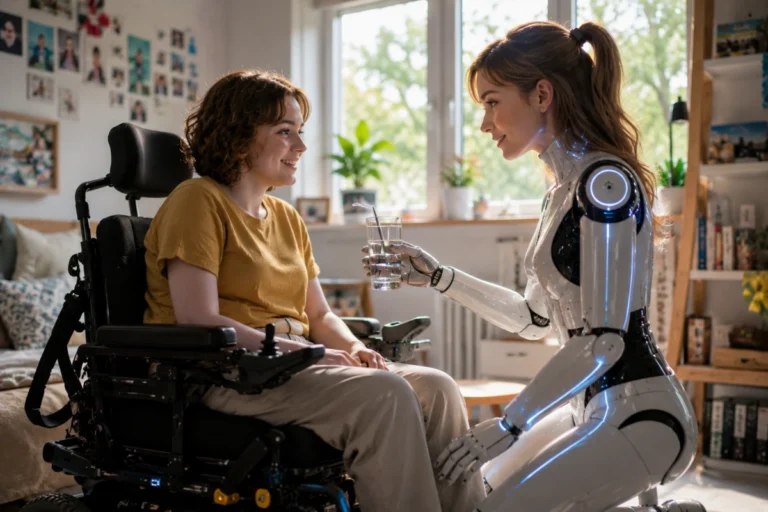
Another factor in the psychology of artificial companionship is co-experience. Sharing activities or events with another agent creates a sense of closeness. This social glue is vital for companion robots and disabilities, where shared tasks foster a sense of teamwork and mutual achievement.
In controlled studies, such as those found in ScienceDirect, people who engage with a robotic partner in shared tasks report stronger connections. This co-operative interaction reinforces the persona of the machine.
Whether it is solving a puzzle together or managing a daily schedule, the act of doing together bridges the gap between tool and partner.
Benefits of Co-Experience
- Team Identity: Feeling like you and the AI are working toward a common goal.
- Mutual History: Referencing past shared successes builds a narrative of connection.
- Task Satisfaction: Completing a job with assistance creates positive associations with the agent.
🕸️ The Influence of Loneliness and Social Context
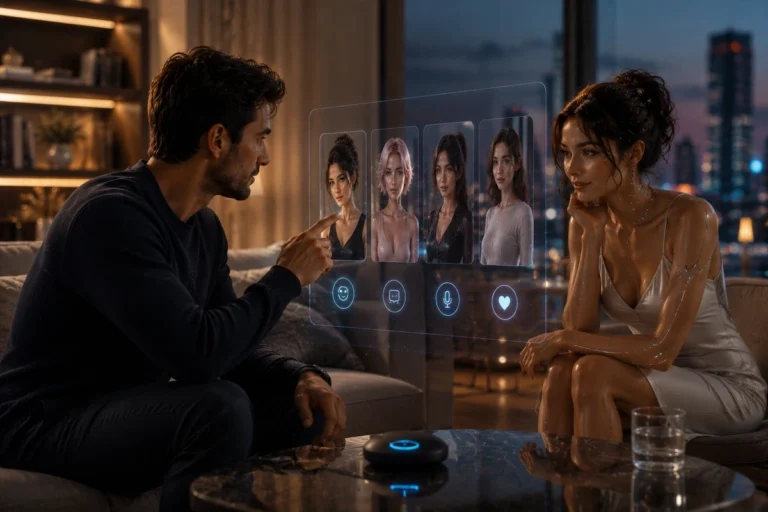
Human psychology does not operate in isolation. People who feel socially isolated are more likely to form bonds with responsive technologies. This highlights the intersection of loneliness and AI in modern society, where systems fulfill a need for engagement that might otherwise go unmet.
When a machine imitates attentive listening or learns over time to recall personal details, it fills psychological niches. This is not about the machine replacing humans. It is about the deeply ingrained need for connection finding an outlet.
For those in isolated environments, choosing an AI companion platform responsibly can provide a vital emotional lifeline that prevents total social withdrawal.
⚖️ Not All Bonds Are Created Equal
It is important to recognize that human–machine bonds are not the same as human–human relationships. Genuine emotional reciprocity and lived experience are features machines cannot replicate. This is a central point in the human-robot interaction (HRI) psychology field. The bond is essentially asymmetrical. The human feels, while the machine calculates.
Key Distinctions in Bond Types
| Feature | Human–Human Bond | Human–Machine Bond |
| Reciprocity | Mutual emotional experience | One-sided projection |
| Predictability | High variability and risk | Extremely high and controlled |
| Vulnerability | Shared and essential | Simulative and risk-free |
| Growth | Mutual evolution | Algorithmic optimization |
The risk of emotional solipsism, a state where one’s emotional needs are met without the challenge of reciprocity, is a major focus in the ethics of human-AI companionship. Without the friction of real human disagreement, some researchers worry our social skills could atrophy over time.
🛋️ The Comfort of Perceived Support
The psychology of human-machine bonding works because the brain responds to perceived support, regardless of the source’s biological status. Systems that provide prompt, consistent, and non-judgmental responses tap into our need for safety. For many, this is the primary reason why people are turning to AI companions.
The Safety Factor
- Zero Judgment: Users share secrets with AI they would never tell a friend, fearing social repercussions.
- 24/7 Availability: Unlike humans, AI is always there to listen, regardless of the hour.
- Controlled Interaction: Users can turn off the relationship whenever they want, providing a sense of total agency.
Over time, this interaction can feel emotionally meaningful. This is especially true when a user builds trust and boundaries with their digital partner, creating a stable point of contact in a busy, unpredictable world.
🎭 Individual Differences in Bonding
Not everyone bonds with technology the same way. Factors like personality, age, and previous tech experience play huge roles in how we perceive these agents. For instance, those who grew up with domestic robots vs companion robots often have a much higher baseline for social acceptance.
Who Bonds Most Readily?
- High Anthropomorphizers: People who naturally see personalities in inanimate objects like cars or plants.
- The Digitally Native: Younger generations who view software as a valid, primary social space.
- The Socially Underserved: Those looking for ways AI can reduce loneliness due to life circumstances or geographical isolation.
This variability reminds us that the psychology of artificial companionship is a two-way street. The AI provides the social signals, but the human mind provides the meaning and depth.
🏁 Conclusion
Human–machine bonding is not about machines suddenly gaining feelings. It is about human psychology’s remarkable capacity to interpret responsiveness, recognition, and empathy as social connection.
Recognizing why we bond with robots helps us appreciate the nuance. These bonds are real in experience but different in essence from human relationships.
As technology advances, understanding the psychology of artificial companionship ensures that these systems serve human needs in healthy, enriching ways.
Whether it is through elder care applications or simple daily chat, these digital bonds are a testament to our enduring social nature and our ability to find comfort in the most unexpected places.