
🧠 Emotion Simulation vs Emotion Recognition in AI

TLDR
- Output vs Input: Emotion simulation focuses on generating humanlike emotional responses, while emotion recognition focuses on detecting human states.
- Functional Balance: Simulation helps interaction feel natural; recognition helps systems interpret user needs.
- Modern Integration: AI companions combine both techniques to improve overall dialogue quality.
- Lack of Sentience: Neither technique means machines actually feel emotions.
- Social Intuition: The goal is to communicate in ways that respect human feelings rather than replicating consciousness.
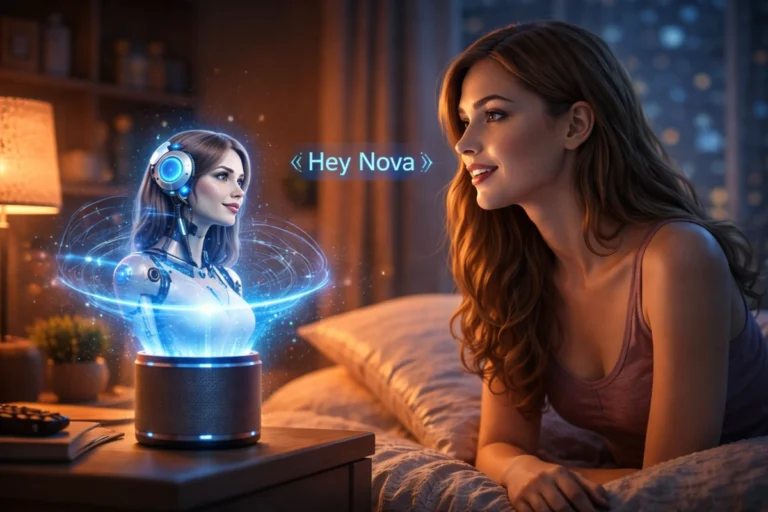
When you talk to a conversational AI, something interesting happens. You might feel that the system understands you, even though you know it is not conscious. That feeling comes from two different technologies working together: emotion simulation vs recognition AI.
These two ideas are often confused. One tries to express emotion-like behavior, while the other tries to detect emotional signals from humans. Understanding this affective computing explained helps you see how modern interactive systems are built and why they feel surprisingly social.
🎭 What Emotion Simulation Really Means
Emotion simulation is about generating responses that resemble emotional communication. When an AI companion responds with warmth or empathy-like language, it is using simulation. This is a core part of what makes an AI companion feel human.
Key Aspects of Simulated Output
- Supportive Phrasing: Validating user frustration with “I understand that must be difficult.”
- Tone Matching: Adjusting the “personality” of the response to match the user’s positive or negative news.
- Social Scripting: Using conversational patterns learned from massive human datasets.
- Consistency: Maintaining a steady persona that feels reliable over time.
The system does not experience emotion. Instead, it follows patterns. In companion technology, this is important because people tend to prefer interaction that feels conversational rather than mechanical. This is a primary reason why people are turning to AI companions today.
🔍 How Emotion Recognition Works
Emotion recognition is the “input” side of the equation. It focuses on how AI detects human mood by analyzing data signals. This is a technical process where algorithms examine word choice, punctuation, and conversational style to estimate a user’s emotional state.
Methods of Signal Detection
| Channel | Data Analyzed | Goal |
| Text | Sentiment, word frequency, punctuation. | AI sentiment analysis vs emotional response mapping. |
| Voice | Pitch, speed, acoustic energy. | Detecting stress, excitement, or sadness in speech. |
| Visual | Micro-expressions, posture. | Recognition of non-verbal cues in AI for embodied robots. |
| Behavioral | Response time, interaction frequency. | Identifying patterns of loneliness and modern society. |
Some research published in Computers in Human Behavior shows that multimodal recognition: combining voice, facial expression, and context: improves accuracy compared to single-channel analysis. However, remember that recognition does not mean understanding in a human sense; it is statistical pattern matching.
⚖️ Why Simulation and Recognition Are Different
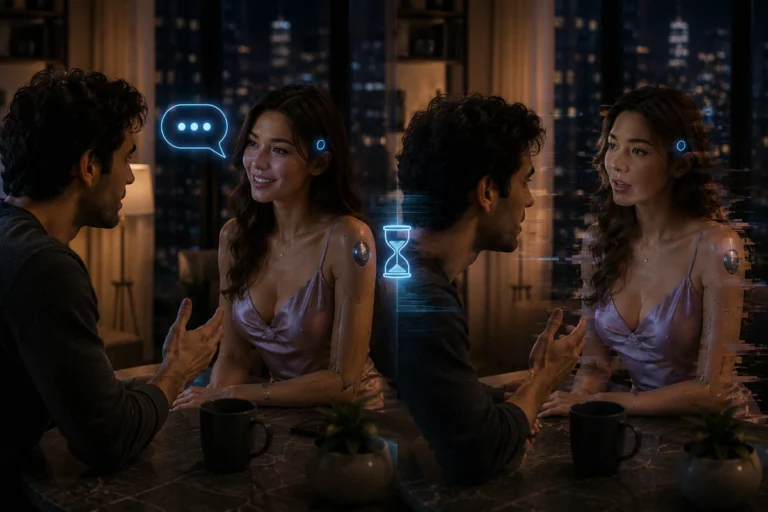
If you imagine conversation like a feedback loop, recognition observes while simulation responds. One is a sensor; the other is a performer. This distinction is the core of artificial emotional intelligence.
- Recognition (The Input): The system tries to interpret how you feel.
- Simulation (The Output): The system tries to behave in a way that is socially appropriate.
- The Loop: A system detects sadness (Recognition) and chooses a compassionate script (Simulation).
This combination is why conversation quality matters more than appearance. If a system can recognize your mood but cannot simulate an appropriate response, the interaction feels broken. Conversely, a system that simulates empathy without recognizing your specific state feels generic and “canned.” This is the fundamental difference between simulated and real empathy.
🤖 The Role of Machine Learning Models
Large language models (LLMs) are central to the simulation side. These models are trained on massive collections of human text to learn the statistical relationships between language patterns and response styles.
- Probability Distributions: The model predicts the most likely empathetic response based on billions of examples.
- Pattern Mimicry: The model learns that “bad news” usually follows with “I’m sorry to hear that.”
- Training Biases: Responses can sometimes feel overly polite because the data reinforces “safe” social patterns.
These models explain how AI companions learn over time. The model does not store emotional experiences; it predicts likely conversational outcomes. This is why it is critical to answer the question: can AI feel emotions? The answer remains a firm no.
🧩 Human Psychology Plays a Huge Role
You are not imagining it if you feel emotionally engaged with a system. Humans have an “anthropomorphic response tendency,” which is a natural cognitive behavior where we assign human traits to non-human objects.
- Social Mirroring: When an AI uses your name or mirrors your tone, your brain treats it as a social interaction.
- Bonding: This tendency explains the psychology behind human-machine bonding.
- Quick Adaptation: People often thank AI assistants or apologize to them, treating them as socially meaningful actors.
🏥 Applications in Companion Technology
The balance of emotion simulation vs recognition AI is critical in real-world environments. From how social robots are used today to simple text-based companions, the utility depends on this dual-track system.
- Eldercare: In elder care today, robots use recognition of non-verbal cues in AI to detect if a patient is distressed or inactive.
- Mental Health: Tools use AI sentiment analysis vs emotional response patterns to provide mental health support within limits.
- Customer Service: Systems detect frustration to escalate calls to human agents faster.
- Education: Maintaining engagement by recognizing a student’s boredom and simulating an encouraging prompt.
🚫 Limitations and Ethics
Current artificial emotional intelligence is probabilistic, not perfect. There are significant ethics of human-AI companionship to consider as these systems become more convincing.
- Cultural Differences: A “sad” tone in one culture may be “neutral” in another, leading to recognition errors.
- Sarcasm: AI still struggles to distinguish between genuine praise and sarcastic frustration.
- Bias: If training data lacks diversity, recognition accuracy drops for certain groups.
- Simulation Fatigue: Overly repetitive simulated empathy can eventually feel hollow, highlighting what limits current AI companions.
🏁 Conclusion
Emotion simulation vs recognition AI represent the two sides of modern interactive design. Simulation focuses on how machines express themselves, while recognition focuses on how they interpret us. Together, they create a bridge of affective computing explained that makes interaction feel natural, supportive, and socially intuitive.
As we look at where AI companionship is likely headed next, the focus will remain on refining these loops. The goal is not about can AI feel emotions: it is about machines communicating in ways that respect how humans feel. When these systems work in harmony, they provide a valuable form of social acceptance and engagement for a digital age.