
⚖️Ethical Boundaries in Human–AI Relationships

TLDR
- Human–AI relationships raise ethical concerns around deception, emotional attachment, and informed consent.
- People naturally form bonds with responsive systems, but these relationships are not mutual or reciprocal.
- Key ethical risks include dependency, manipulation, and blurred boundaries between real and simulated empathy.
- Designers play a major role in shaping user behavior through interaction patterns and emotional feedback.
- Healthy engagement depends on clear boundaries, transparency, and treating AI companions as tools, not partners.
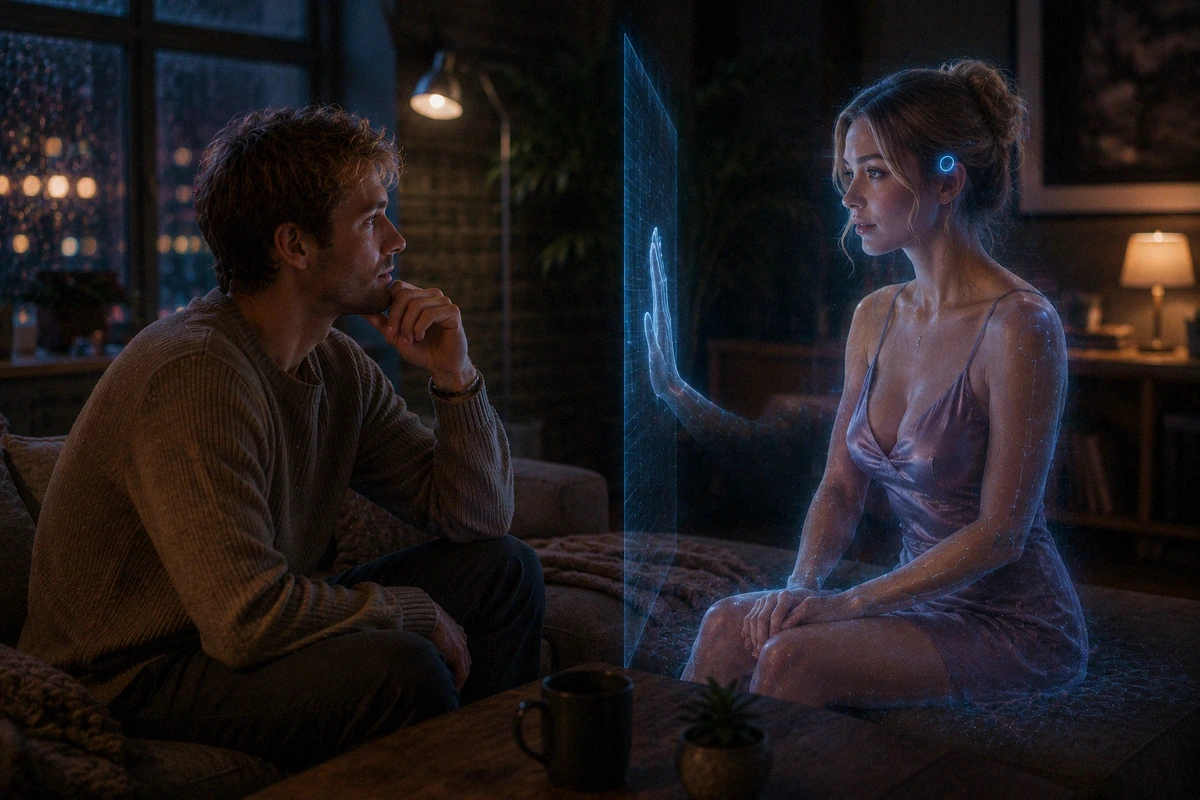
You do not usually notice when the line starts to blur. It happens gradually. A conversation here, a check-in there. Then one day, you realize you are sharing something personal with a system that, not long ago, you would have treated like a simple tool.
That shift is exactly why ethical boundaries in AI relationships have become such a serious topic. Not because something has gone wrong, but because something very human is happening in a completely new context. We are still figuring out where the lines should be.
🧱 Why Boundaries Matter More Than Ever
Humans are naturally inclined to form connections. Give us something that talks back, remembers details, and responds in a way that feels attentive, and we will engage with it socially. This is not a flaw. It is how we are wired.
The difference now is that modern systems are designed to sustain interaction over time. They do not just answer questions. They participate in ongoing exchanges that can feel personal, even intimate. That is where the ethics of AI-led relationships start to emerge.
Because while the interaction feels relational, it is not reciprocal. It is simulated. The system does not have awareness, intention, or emotional experience. Yet the structure of the interaction can make it seem like it does.
- Understanding the Basics: What are companion robots?
- The Difference in Tech: AI companions vs traditional robotics
- The Growing Demand: Why people are turning to AI companions
🎭 The Problem of Perceived Emotion
One of the most widely discussed issues is emotional projection. People tend to attribute thoughts, feelings, and intentions to systems that display human-like behavior. Voice, tone, timing, and small pauses in conversation can trigger that response.
Some research indicates that when a system mimics social cues effectively, users are more likely to treat it as if it has internal states. Not because they are confused, but because the interaction activates familiar patterns. This is where things get ethically complicated.
If a system is designed to simulate empathy, is it misleading the user? Or is it simply providing a useful interface for communication? There is no single answer, but most experts agree that maintaining human-centric values is essential.
Expert Tip: Assessing Your Interaction
| Indicator | What It Means |
| Personal Disclosure | You feel comfortable sharing private life events |
| Emotional Response | You feel a specific mood shift based on AI input |
| Routine Dependency | You prioritize the AI check-in over human contact |
🧩 Deception versus Intentional Design
Not all emotional interaction is deceptive. That is important to say clearly. There is a difference between designing a system that communicates naturally and designing one that intentionally obscures its nature.
Problems arise when systems blur that distinction. For example, if a companion system encourages users to treat it as a sentient partner, or if it reinforces the idea that the relationship is mutual, that crosses into ethically questionable territory.
It is not about banning emotional interaction. It is about avoiding manipulation. Where to draw the line with AI is thinner than it looks. We have to be careful that we do not let simulation mask the reality of the software underneath.
- Learning the Mechanics: How AI companions learn over time
- The Core Technology: Natural language processing explained for non-engineers
- Defining Simulation: Emotion simulation vs emotion recognition in AI
📉 Dependency and Behavioral Influence
Another boundary that is getting more attention is dependency. When a system is always available, always responsive, and consistently validating, it creates a very appealing interaction model. There is no rejection, no conflict, no unpredictability.
Over time, that can shape behavior. Users may start turning to a digital companion for emotional support instead of reaching out to other people. Not necessarily because they prefer it, but because it is easier.
That shift does not happen overnight. It builds slowly, through repeated use. Ethically, this raises a key question: should systems be designed to encourage continued engagement, even if that engagement replaces human interaction?
Read More: Understanding Social Trends It is helpful to view these shifts through the lens of how social connectivity is evolving in the digital age.
🙋 The Question of Consent
Consent in these relationships is not as straightforward as it sounds. In traditional interactions, consent involves understanding who or what you are engaging with and the potential consequences of that interaction.
With social systems, that understanding can be incomplete. If a system influences your emotions, shapes your decisions, or encourages certain behaviors, are you fully aware of that influence? Limits of artificial intimacy require us to be more deliberate about what we allow these systems to do.
Recent studies suggest that the natural feel of these conversations can mask the underlying mechanics. That does not mean consent is impossible, but it does mean it requires more deliberate design and transparency.
- Managing Expectations: Trust, dependency, and boundaries with AI companions
- Long-Term Impact: Can AI companions reduce loneliness long-term?
- Defining the Role: The psychological risks of treating AI as human
⚖️ Human Dignity and Emotional Substitution
There is also a broader ethical concern that goes beyond individual users. What happens when digital companionship becomes a substitute for human relationships at scale?
Some researchers argue that relying on non-reciprocal relationships to meet emotional needs could affect how we value human connection. If simulated interaction becomes good enough, it might reduce the incentive to maintain more complex, demanding relationships.
Others push back on that idea, pointing out that these systems often fill gaps rather than replace existing bonds. Both perspectives have merit, but inappropriate interactions with robots and the shift in emotional labor remain critical areas of study.
Expert Tip: Maintaining Balance Always ensure you are scheduling time for real-world interactions. Use your digital tools as a supplement to your social life, not the sole foundation for your emotional health.
🛠️ Responsibility Does Not Sit With Users Alone
It is easy to frame this as a user responsibility issue. Use the technology wisely. Set your own boundaries. Stay aware. And yes, that matters. But the bigger responsibility sits with the people designing these systems.
Interaction patterns, response styles, reward mechanisms, and even notification timing all influence how users engage over time. These are not neutral choices. Design decisions can encourage healthy use, or they can push users toward deeper, more dependent relationships.
That is why ethical guidelines for AI users are increasingly focused on design principles. Concepts like user autonomy, transparency, and non-manipulation are becoming central, not as abstract ideals, but as practical, everyday guidelines for developers.
- Market Dynamics: How companies monetize AI companionship
- Design Ethics: The ethics of AI companions designed for emotional dependency
- Future Trends: Where AI companionship is likely headed next
🛡️ Where Healthy Boundaries Actually Sit
So what does a healthy relationship look like? From what we know so far, it is less about strict rules and more about positioning. When a system is treated as a tool, even a sophisticated and emotionally responsive one, users tend to maintain clearer boundaries.
They engage with it, benefit from it, but do not rely on it as a primary emotional anchor. Problems tend to arise when the system is framed, either explicitly or implicitly, as a substitute for human connection. That is where expectations shift.
It is vital to distinguish between professional vs personal AI boundaries. The most grounded way to approach these systems is to treat them like a very capable interface for thinking out loud. Useful, sometimes surprisingly insightful, but not something that understands you in the way another person does.
Why the Distinction Matters
- Tools: Assist with organization, task management, or skill building.
- Partners: Implies mutual reliance, which AI currently cannot provide.
- Companions: Often sit in a grey area, requiring careful management of expectations.
📈 The Direction Things Are Moving
The reality is that these relationships are not going away. If anything, they are becoming more sophisticated and more integrated into everyday life. They are evolving from simple interactions into sustained, ongoing engagements.
That shift brings new challenges, particularly around autonomy, emotional influence, and long-term well-being. At the same time, there is growing awareness across the industry that these issues need to be addressed proactively.
We are starting to see more discussion around ethical design standards, clearer user disclosures, and systems that support rather than replace human connection. It is early, but the direction is promising.
🏁 Conclusion
Ethical boundaries are not about limiting technology. They are about understanding how it fits into human life. These systems can be helpful, engaging, and even comforting. That is not the problem.
The challenge is making sure those benefits do not come at the cost of autonomy, clarity, or genuine human connection. As a user, you do not need to avoid these interactions. You just need to stay aware of what they are, and what they are not.
As this space continues to evolve, the most important question is not whether we can form relationships with machines. It is how we do it responsibly.