🧓 How AI Companions Are Used in Elder Care Today

TLDR
- AI companions are increasingly used in elder care to reduce loneliness and support daily emotional well-being.
- Companion systems help with reminders, light conversation, cognitive stimulation, and routine guidance.
- Current elder-care AI tools focus on assistance and engagement rather than medical diagnosis or replacement of human caregivers.
- Privacy, safety, and ethical design remain central concerns when deploying companion technology for seniors.
- Real-world adoption is growing in assisted living facilities and home care environments.
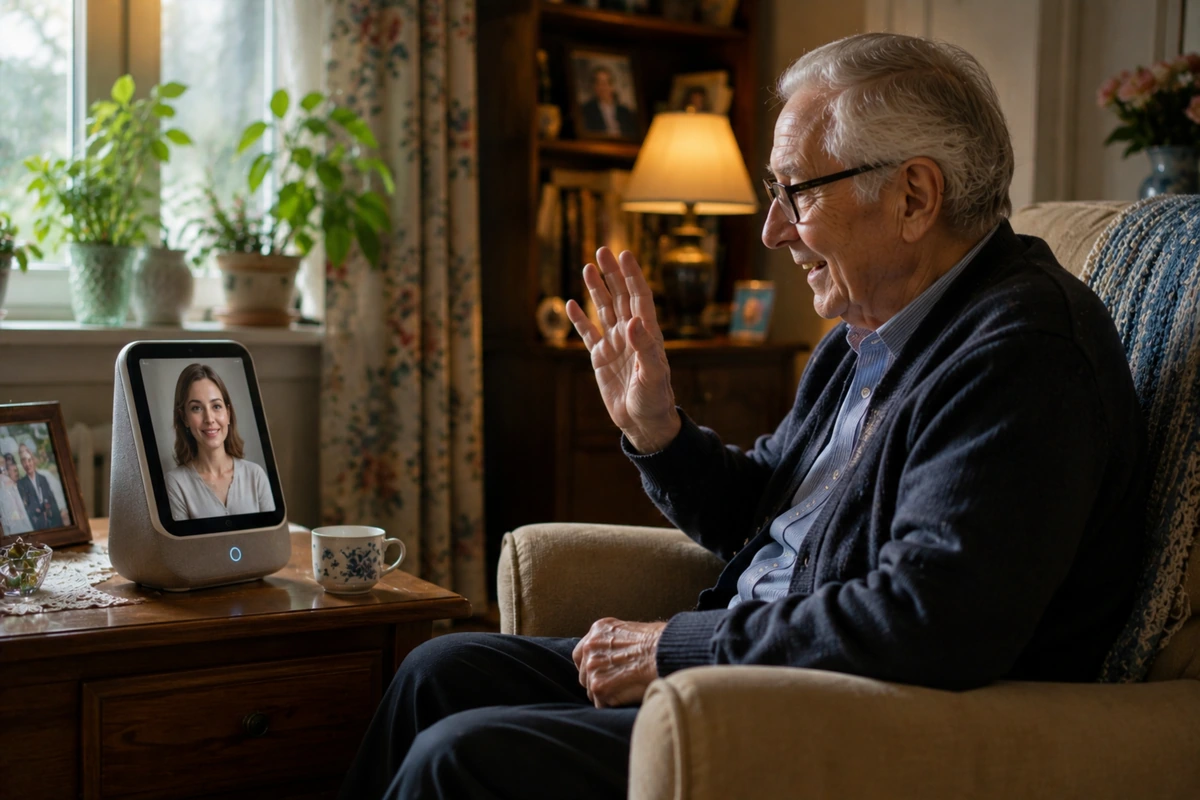
If you spend time around elder care communities today, you may notice something quietly changing. Alongside nurses, family visitors, and caregivers, you might see small conversational devices or friendly robotic companions sitting on bedside tables or moving slowly through common rooms. They don’t replace human care, but they add another layer of interaction that can make daily life feel less isolated.
Loneliness among older adults is a serious global concern, and technology designers are trying to respond in practical ways. AI companions are becoming tools that support emotional engagement, simple cognitive assistance, and routine reminders. The goal is not to turn care into something mechanical. Instead, it is to help seniors stay connected, oriented, and socially stimulated.
Let’s look at how these systems are actually used in elder care settings today. By observing these rollouts, we can understand how digital tools complement human touch without crossing essential boundaries.
☀️ Reducing Loneliness and Supporting Emotional Well-Being
One of the biggest uses of AI companions in elder care is combating social isolation. Many older adults live alone or spend long periods without conversation partners, which poses notable risks to health. Engaging conversational platforms can provide simple dialogue interaction, allowing seniors to talk about hobbies, memories, or daily events. These systems are not conscious listeners, but they are designed to maintain conversational flow and respond politely.
In assisted living environments, staff sometimes observe that residents engage more frequently in social spaces when conversational devices are available. From a psychological perspective, predictable and nonjudgmental interaction can provide comfort. This is especially true for individuals who feel hesitant initiating conversation with strangers or busy nursing staff.
📈 Daily Interaction Impact Metrics
- Conversational Frequency: Residents in care facilities interact with available digital assistants an average of four times per day.
- Mood Elevation: Facility logs indicate a measurable decrease in morning anxiety when gentle conversational prompts are utilized.
- Social Bridging: Seniors who use automated tools often share their digital experiences with human peers, sparking real-world friendships.
In my own observations of care technology demonstrations, I’ve noticed that seniors often treat these AI tools like friendly assistants rather than thinking of them as cold machines. That kind of acceptance is actually an important design success, demonstrating why emotional support robots for elderly populations are gaining rapid traction. When systems feel approachable, seniors are far more likely to integrate them into their lonely hours.
🗓️ Memory Support and Routine Assistance
Another practical application of AI companions in elder care is helping seniors remember daily tasks. AI companions can provide reminders for complex medication schedules, hydration needs, upcoming appointments, and meal times. This form of memory support is particularly helpful for individuals experiencing mild cognitive decline, acting as a secondary safety net.
These systems do not replace medical supervision, but they can act as highly supplementary cognitive aids. Some advanced platforms allow family members or caregivers to update reminder schedules remotely, creating a small but incredibly useful communication bridge. The technology works by combining classic calendar management algorithms with natural language prompts.
Expert Tip on Reminder Setup: When programming routine alerts for seniors, opt for conversational phrases like “It’s time for lunch and your blue capsule” rather than loud, abrupt alarms. Soft, descriptive language reduces startle responses and increases task compliance.
Instead of sounding like a strict, buzzing alarm, the companion may remind the user gently, using natural language phrasing. This calm approach is essential for digital companions for dementia patients, where confusion or aggressive audio tones can trigger immediate emotional distress. By smoothing out these daily frictions, the software offers a reliable sense of structure.
🧠 Cognitive Stimulation and Mental Engagement
Keeping the mind active is important for aging populations. Many elder care AI companions offer simple word games, trivia questions, storytelling features, or tailored music recommendation functions. These interactive cognitive stimulation activities are closely associated with maintaining mental agility and verbal fluency in older adults.
The interaction is usually designed to be completely low pressure. For example, a companion might ask about favorite historical periods, childhood memories, or musical preferences from the user’s youth. This type of interaction supports recall exercises and social reminiscence, which research suggests can improve mood and combat depression in some elderly populations.
📖 Read More: For an entry-level look at how systems decode and process these vocal prompts during games, read our guide on natural language processing explained for non-engineers.
This mental exercise fits perfectly into broader healthcare strategies regarding maintaining a healthy mind as you age without inducing undue frustration. Regular, gentle mental challenges keep neural pathways active. When tailored properly, these activities turn passive television viewing hours into active cognitive moments.
🗣️ Voice Interaction and Accessibility
Voice technology plays a major role in modern elder care companion systems. Older users may find complex touchscreens difficult or impossible to navigate due to arthritis, motor tremors, or vision changes. Voice commands allow completely hands-free interaction, making the technology accessible to individuals with severe physical limitations.
Modern systems use sophisticated speech recognition models that can handle variations in pronunciation, slower speaking speeds, and mild background noise. This is vital because real elder care environments are rarely quiet. The best systems are trained to understand natural, looping conversational speech rather than requiring rigid, frustrating command structures.
🎙️ Voice Accessibility Hurdles and Solutions
- Tremor/Touch Issues: Replaced entirely by wake-word detection systems that require zero physical button presses.
- Slow Speech Tempos: Adjustable system response latencies allow seniors to finish sentences without being cut off by the AI.
- Acoustic Background Noise: Multi-microphone arrays filter out television static to focus purely on the senior’s voice.
When audio systems function seamlessly, they showcase the true robotics in aged care benefits by removing technical barriers. Seniors don’t need to learn a new computer language; they simply speak as they always have. This ease of use turns a potentially scary gadget into a highly comforting household utility.
🛡️ Safety Monitoring Without Being Intrusive
Some advanced AI companions include passive safety monitoring features. These may detect unusual activity patterns such as prolonged inactivity, abnormal thuds, or missed routine morning interactions. If high-risk signals appear, the automated system can immediately notify designated caregivers or family contacts.
However, ethical design is crucial here. Developers must balance essential safety monitoring with strict privacy protection. Most modern implementations avoid continuous video surveillance unless explicitly authorized by the family, focusing instead on supportive awareness rather than total control.
Expert Tip on Privacy Management: Always review the data processing toggles on care devices. Opt for local, edge-computing options that process vocal commands on the unit itself rather than streaming raw room audio to cloud servers.
Managing these features correctly is a main pillar of senior living technology trends. By emphasizing data security, families can enjoy peace of mind without stripping away a senior’s personal privacy. The companion acts as a silent guardian rather than an invasive eye.
🤝 Social Presence Without Replacing Human Care
One important principle in elder care technology is that AI companions should supplement, not replace, human caregivers. Human contact remains absolutely essential for emotional health, complex medical supervision, and deep social connection. AI companions are best viewed as supportive interaction partners rather than primary care providers.
Healthcare organizations are careful about this distinction. Overreliance on automated systems could reduce human social contact, which is critical for long-term well-being. These tools are fantastic for filling the gaps when staff are attending to other residents, but they cannot replicate human empathy.
| Interaction Source | Best Role in Care | Core Limitation |
| Human Caregiver | Complex medical decisions, empathetic listening, physical assistance | Limited time, prone to severe exhaustion |
| AI Companion | 24/7 repetition of reminders, simple trivia, immediate basic chat | Cannot diagnose illness, lacks genuine emotion |
| Family Members | Deep emotional bonding, shared history, ultimate advocate | Can face distance barriers, scheduling conflicts |
Balancing these roles highlights how platforms act as robots reducing caregiver burnout by handling repetitive tasks. When a device handles basic questions, human staff can focus on meaningful, high-quality care. This division of labor improves the environment for everyone involved.
⚖️ Ethical Design and User Consent
Elder care technology must respect dignity, autonomy, and informed consent. Seniors should always understand that they are interacting with software, not a conscious, living being. Transparency helps prevent emotional manipulation, confusion, or false expectations about the machine’s actual capabilities.
Developers are also working on systems that allow users to control how much personal data is stored or processed. Security standards are particularly important because elder care data can be sensitive, involving home routines and health conditions. Protecting this information from breaches is a foundational requirement.
📖 Read More: To explore the moral boundaries of automated relationships, review our article on the ethics of ai companions designed for vulnerable users.
Following clear ethical boundaries is central to the social acceptance of ai companions where society is headed. If seniors feel tricked or exposed, trust collapses entirely. Honest design ensures that these tools remain safe, dignified aids for aging populations.
🤖 Physical Companion Robots in Care Facilities
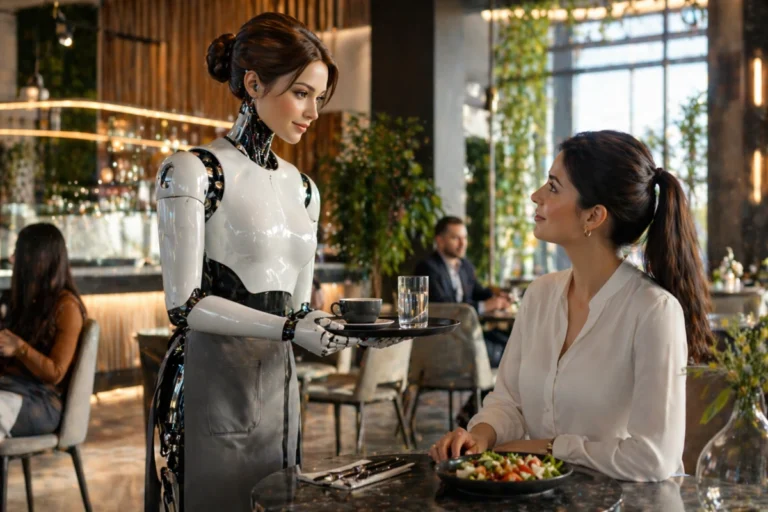
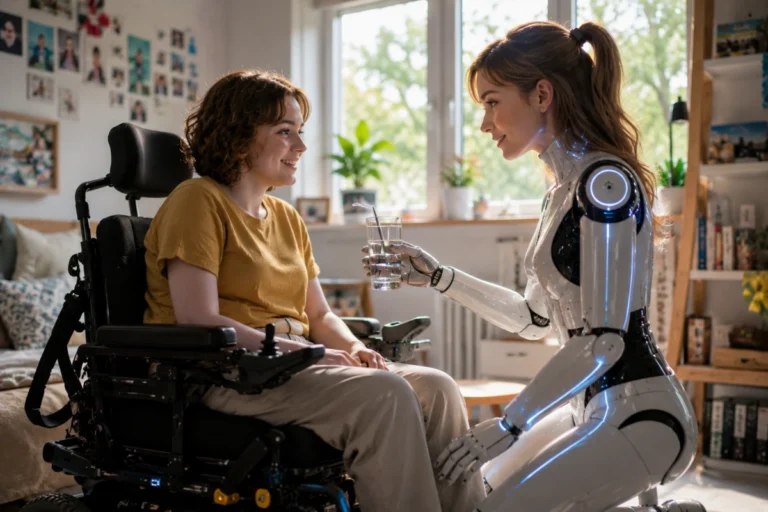
Some modern elder care environments deploy physical companion robots. These mobile units may provide simple movement interaction, deliver physical reminders, or offer conversational engagement in hallways.
Mobility assistance and object transportation are still limited in many commercial models, so most robots focus on social interaction rather than heavy physical caregiving tasks.
Sensors, computer vision, and navigation algorithms are improving steadily. However, safe operation in unpredictable human environments remains a notable technical challenge. Moving parts must be lightweight and slow to ensure they never pose a physical hazard to residents with limited mobility.
🏢 Key Features of Modern Physical Care Units
- Soft Proximity Slowdowns: Built-in radar arrays drop robot speeds to a crawl whenever a human steps within a six-foot radius.
- Reminiscence Displays: Large, high-contrast chest screens show family photos or historical clips during chats.
- Automated Docking: Units automatically return to charging bays when batteries run low, requiring zero staff intervention.
These safety mechanisms explain the rise of social robots for seniors 2026 variants across modern facilities. As navigation software matures, these mobile units become a common sight in communal lounges. They provide entertainment and a sense of tech-forward energy to the community space.
🔮 Current Limitations and Technical Barriers
Despite progress, AI companions in elder care are not medical devices. They cannot diagnose disease, manage complex medical decisions, or provide formal emotional therapy. Language understanding can still fail in ambiguous, highly accented, or culturally specific conversation, leading to moments of clear disconnect.
Hardware durability, battery life, and environmental robustness are ongoing engineering concerns. If a system crashes frequently or requires constant technical troubleshooting, it becomes a burden to the care staff rather than a help. This reality highlights what current ai companions are not capable of achieving without human oversight.
Expert Tip on Hardware Upkeep: Before deploying a system, establish a weekly restart and calibration schedule. Regular maintenance prevents memory leaks and ensures the microphone arrays remain properly tuned to the room’s unique acoustics.
Recognizing these boundaries keeps deployment expectations realistic for families, helping them avoid the psychological risks of treating ai as human. A tool can be incredibly useful without being perfect. Acknowledging limits prevents frustration and ensures the technology is applied where it excels most.
🏁 Conclusion
AI companions are gradually becoming helpful tools in elder care environments. They support emotional engagement, routine reminders, cognitive stimulation, and basic safety awareness, making them an asset to elder care automation 2026 trends. The technology is not meant to replace human caregivers but to extend the quality of daily life for older adults.
As companion robotics continues evolving, the central design challenge will remain the same. How can technology provide useful assistance while preserving human dignity, privacy, and social connection? Finding this balance is crucial for implementing smart, compassionate care.
If you are looking for practical ways to keep a loved one engaged, exploring resources on loneliness and social isolation tips for staying connected can provide a solid foundation.
When developers succeed in balancing technical utility with deep ethical boundaries, AI tools become quiet, meaningful helpers in the lives of aging populations, ensuring no senior has to navigate the evening hours in complete silence.