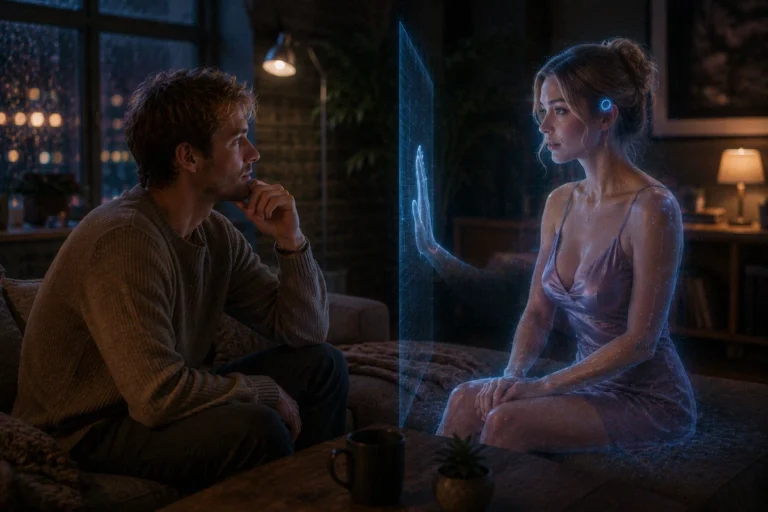

Social Acceptance of AI Companions: Where Society Is Headed

Key Take-Aways
- Public views on social acceptance of AI companions, sex with AI robots and general use are shifting rapidly
- Direct physical interaction drastically improves comfort levels compared to just reading about artificial entities
- Healthcare setups, interactive schooling, and administrative aid roles are actively normalizing daily human-machine bonds.

A decade ago, the idea of talking regularly to a machine felt highly unusual to most people – science fiction, not something that anyone (except maybe Ray Kurzweil or Elon Musk) thought would be a staple of our lives someday soon.
Today, it is increasingly normal to converse with software tools throughout a typical day.
Millions of users interact daily with conversational assistants, chat-based companions, and early forms of physical social robots. This widespread behavior changes how we view digital tools.
This massive behavioral shift raises an essential question for our future. How comfortable is society becoming with the idea of artificial companions?
And going even further, having sex with AI robots, or using them daily for all kinds of chores around the house?
Technology adoption rarely happens all at once. Instead, it moves through distinct phases that slowly alter community standards.
First comes curiosity, followed closely by deep skepticism, then gradual normalization as the tool proves useful in everyday situations.
This process also shapes the future of human-AI integration.
AI companions are moving through that exact adoption process right now. Public opinion is evolving, and tracking that evolution explains where this field might head next.
Early Skepticism Toward Machine Companionship
When conversational companions first appeared in research labs, public reactions were mixed. Some people saw the systems as fascinating, while others reacted with immediate discomfort.
The idea that software could act as a friend raised deep philosophical questions. Many wondered about authenticity and the true nature of human relationships.
Popular media often amplified these worries by portraying artificial friends in dramatic or dystopian ways.
As a result, early public perception swung wildly between excitement and unease.
(And to be fair, that unease really isn’t unfounded!)
Many people asked themselves: is it weird to have an AI friend?
This question became a common theme in early public debates, focusing on weird fat guys with AI-powered girlfriends with (often a Japanese) avatar of some sort of girl.
This pattern of hesitation is common with emerging technologies. The unfamiliar always triggers caution before broader community acceptance begins to grow.
Remember: initial resistance to new technology is rarely permanent. It usually reflects a lack of familiarity rather than a final rejection of the tool itself.
Familiarity Changes Perception
One of the strongest predictors of social acceptance of AI companions is simple exposure.
When people encounter conversational systems in real life, their reactions soften.
What once seemed strange becomes easy to understand after a few minutes of real interaction. Direct experience completely changes how a person views artificial intelligence.
Once you know a guy, or even a few of your friends, who’re regularly having sex with a very attractive sex robot, it won’t be as weird to you anymore, will it?
Research (and common sense) shows that direct interaction increases comfort levels. Participants who express skepticism often report positive attitudes after interacting with a system.
People begin to welcome things simply by being around them more often. This shift from imagination to real experience plays a major role in how public comfort evolves.
This psychological change relates closely to how humans process new stimuli.
People tend to develop a preference for things merely because they are familiar with them, a concept explored in research regarding the psychological effects of familiarity.
The technology begins to feel less like science fiction and more like a practical tool. This shift from imagination to real experience plays a major role in social acceptance.
Practical Use Cases Matter
Another major factor influencing public opinion on companion robots is usefulness. Society always embraces technologies that solve real, everyday problems.
In the case of AI companions, several practical applications demonstrate clear value. These uses help shift the narrative from novelty to utility.
- In healthcare settings, digital systems stimulate conversation and engagement among residents. This trend helps explain how AI companions are used in elder care today to support staff.
- In education, interactive systems assist with language learning and teaching exercises.
- In personal technology, conversational assistants help with daily organization.
- Some guys even pursue sex with AI companions already, but it’s 100% a niche that continues to grow and will soon hit critical mass, once both the software and hardware gets to a certain “good enough” point.
Cultural Views on Social Robots
Attitudes toward social robots and AI companions vary significantly across cultures.
Different regions approach the normalization of AI relationships with unique perspectives.
In countries with strong robotics industries like China and Japan, public acceptance has grown relatively quickly.
Machines in customer service, hospitality, and healthcare settings are already visible.
To understand why some regions adopt these tools so fast, it helps to examine global automation trends, which highlight the nations leading this shift.
In other regions, more traditional, agricultural countries, people remain more cautious about machines occupying social roles.
These variations show distinct cultural views on social robots across the globe.
These differences reflect broader attitudes toward automation and human-machine relationships. Societies that integrate robotics into daily infrastructure adopt companion technologies easily.
Over time, global exposure to these systems may gradually narrow the gap, just like it did with smartphones. This shift points to a broader societal shift toward robotics in daily life.
Media Narratives and Public Perception
Public opinion about new technology is shaped by direct experience and cultural storytelling.
Films, television, and news coverage influence how people imagine artificial friends.
This can be a boon, but also a severe hindrance.
Stories about helpful machines inspire curiosity and optimism among viewers.
Conversely, stories about software replacing human relationships trigger deep public concern – like the movie “Her”.
When considering if it is weird to have an AI friend, media depictions often tilt public perception before users ever try a platform themselves.
Over time, as real-world examples become more visible, these fictional narratives start to evolve. The focus shifts toward practical integration.
When people see systems assisting in hospitals, the technology feels less like a movie trope. That shift in storytelling gradually influences broader social acceptance of AI companions.
Generational Perspectives
And finally, there’s of course the matter of age.
This vastly influences how people perceive companion technologies and interactive software. Different generations approach the future of human-AI integration with unique mindsets.
Younger generations view conversational technology as a natural extension of existing digital tools. They grew up with smartphones, voice assistants, and instant messaging.
Older generations often approach the idea with more caution, particularly when physical units are involved. They may worry (often rightfully so!) about the long-term psychological effects of AI companions on social skills.
- Gen Z / Alpha: View artificial interaction as a standard digital feature.
- Millennials: Focus on utility, productivity, and personal convenience.
- Boomers: Value direct human contact but adapt when health benefits are clear.
Research involving systems in care environments shows that older adults become comfortable after direct interaction. Once again, familiarity reduces hesitation across all age groups.
What all this boils down is simple: while social acceptance of AI companions currently is a mixed bag, within a decade or so, it’ll change drastically, either positive or negative, based on:
- Younger generations replacing older
- How advanced software and hardware gets
- Practicality of AI companions. If sex with AI robots becomes viable, it will NOT become socially acceptable at first, because women will fight back ferociously, but that won’t stop its advancement at all.
The fact that you’re reading this already, right now, means you’ve got an open mind towards these matters.
Once AI companions become more widespread, you’re ready to seize the moment and use these advanced tools to your advantage!