
🏃Why Movement Matters More Than Looks in Social Robots

TLDR
- Movement is the primary driver of perceived intelligence and emotion in social robots.
- Humans interpret motion patterns faster and more deeply than static appearance cues.
- Small timing and gesture changes significantly affect trust and comfort levels.
- Appearance matters, but movement determines whether an interaction feels “alive.”
- Modern research shows motion design is central to effective human-robot interaction.
When people talk about social robots, the conversation usually drifts toward looks first. Sleek faces, soft materials, and expressive eyes are the initial focus. However, once you dig into how people actually respond during interaction, something interesting shows up: motion tends to matter more than appearance in shaping whether a robot feels socially “real.”
This is a core reason why static AI feels less real to the human brain. Across human-robot interaction studies, movement consistently plays a stronger role than static design features in how people judge intelligence, intention, and emotional presence.
Read Also: What makes an AI companion feel human
🧠 Movement is the First Signal Your Brain Trusts
When you meet a robot (or even a virtual agent), your brain doesn’t start with details like surface texture or facial styling. It starts with motion patterns: how it turns its head, how quickly it reacts, and whether its gestures feel smooth or delayed.
Research in social robotics shows that dynamic cues like gaze shifts, nodding, and body orientation significantly influence movement and social presence. Even small changes in timing can shift perceptions of naturalness and intelligence in a measurable way.
| Cue Type | Impact on Perception | Human Reaction |
| Gaze Shift | Signals Attention | Builds social connection |
| Head Nodding | Signals Agreement | Encourages continued speech |
| Body Tilt | Signals Interest | Increases perceived empathy |
In controlled studies, robots that adjust head movements appropriately are consistently rated as more lifelike than those with identical appearance but static patterns. This highlights the importance of gestures in AI as more than just decoration; they are the primary method of social interpretation.
Read Also: The psychology behind human-machine bonding
🎭 Appearance Gets Attention, But Movement Builds Meaning
It is easy to assume that a more human-like face automatically leads to better social acceptance. But findings in social perception research suggest something more nuanced. People may initially respond to appearance, but long-term judgments about intelligence are shaped more by behavior than looks.
This is a recurring theme when discussing why movement matters in robots. A well-designed face can grab attention, but if responses feel delayed or stiff, the illusion breaks.
One recent study on robot perception found that beliefs about a robot’s mental capacity are strongly reinforced by how the robot moves in real time.
Appearance opens the door, but movement determines whether you stay in the room. This is why the importance of non-verbal cues cannot be overstated in the design process.
Read Also: Why conversation quality matters more than appearance in AI companions
💓 Motion Carries Emotional Information
Human communication is deeply tied to movement. We don’t just interpret words; we read rhythm, gesture timing, and subtle shifts in posture. Social robotics research reflects this directly: body movement alone can communicate emotional states recognized by humans with surprising accuracy.
- Rhythm: Smooth movements suggest calm and competence.
- Speed: Quick, jerky movements can signal anxiety or a system error.
- Posture: Open postures increase the likeability of the device.
This phenomenon is often called kinetic empathy in robotics. Facial design helps, but movement fills in the gaps. A slight head tilt or a pause before responding can change how you perceive intention. When these cues align, people report higher levels of perceived intelligence.
Read Also: Emotion simulation vs emotion recognition in AI
⏱️ Timing is Often More Important Than the Gesture
One detail that often surprises people new to robotics is how sensitive humans are to timing. It is not just what a robot does, but when it does it. This is why making robots move naturally is such a technical hurdle for developers.
💡 Expert Tip: To test the “realness” of a social robot, watch its eyes. If the gaze shift happens slightly before it starts speaking, it mirrors human biology and feels much more natural.
Studies show that even simple gestures like nodding are interpreted differently depending on whether they occur before, during, or after speech.
When timing aligns with conversational expectations, users perceive the robot as socially aware. This is a major area of study for those looking at robot motion generation and imitation.
Read Also: What limits current AI companions technologically
📉 The “Uncanny Valley” and Behavioral Realism
People often associate the uncanny valley with overly realistic faces. However, the role of body language in social robots plays a huge part in whether something feels “off.”
- Visual Uncanny Valley: A face that looks almost human but has “dead” eyes.
- Kinetic Uncanny Valley: A movement that looks almost human but lacks biological weight or momentum.
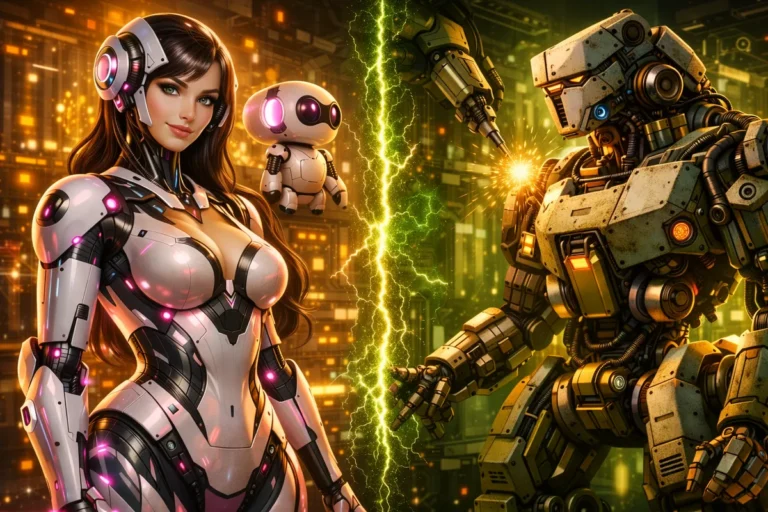
A robot can have an abstract design, like a simple floating ball, and still feel socially engaging if its motion is smooth and context-aware. On the other hand, a visually advanced humanoid can feel uncomfortable if its movements are too rigid. This demonstrates why movement matters in robots far more than skin texture.
Read Also: Companion robots vs smart toys: Where the line is drawn
👁️ Why Your Brain Forgives Appearance But Not Motion
There is an interesting psychological asymmetry here. Humans are surprisingly flexible about appearance. We can interact socially with cartoon avatars or minimalist robots without much discomfort. But motion is harder to ignore.
This is because kinetic empathy in robotics is tied to survival. If something moves in a way that violates expected biological rhythm, your brain flags it immediately as a potential threat or “broken.”
Motion is deeply tied to prediction; your perception system constantly anticipates how other beings should move next.
| Feature | Human Flexibility | Reason |
| Visual Style | High | We accept cartoons/symbols easily. |
| Motion Rhythm | Low | Violations flag biological “errors.” |
| Response Time | Low | Lags break the social contract. |
Read Also: Why people form emotional attachments to AI
🛠️ Implications for Real Companion Robot Design
From a design perspective, this shifts priorities quite a bit. Instead of over-investing in surface realism early on, many robotics teams now focus on the following elements to improve movement and social presence:
- Gaze Direction: Ensuring the robot looks at the user or the object being discussed.
- Turn-taking Behavior: Using physical cues to signal when it is the human’s turn to talk.
- Response Latency Alignment: Matching the speed of movement to the speed of the voice.
These elements often matter more in day-to-day interaction than facial detail. Appearance gets you noticed in a room, but making robots move naturally determines whether people feel comfortable talking to you.
Read Also: How social robots are used today
🤳 A Personal Observation on Testing Systems
When I’ve interacted with early-stage companion devices, the difference between an “interesting prototype” and “something I could spend time with” almost always came down to motion. Even simple improvements like smoother head tracking or more natural pauses during responses changed the entire feel of the interaction.
The role of body language in social robots is what creates the “spark” of life. It’s usually where people underestimate the technology; the instinct is to judge visuals first, but the moment interaction starts, motion takes over the experience completely.
Read Also: What are companion robots
🏁 Conclusion: Movement is the Real Social Interface
If appearance is the packaging, movement is the language. And in social robotics, language always wins. As research continues to show, humans don’t just observe robot motion—they interpret it socially, emotionally, and even morally.
That makes the importance of gestures in AI one of the most powerful design levers in the entire field. We are still early in understanding what fully “natural” robotic movement looks like in everyday environments. But one thing is already clear: if a robot doesn’t move convincingly, it doesn’t matter how good it looks.
Read Also: Social acceptance of AI companions: Where society is headed