🧠The Psychological Risks of Treating AI as Human

TLDR
- Anthropomorphism: Humans naturally project human traits onto machines, which can lead to deep emotional over-attachment.
- Blurred Boundaries: Treating AI as fully human can make it difficult to distinguish between simulated empathy and genuine reality.
- Relationship Expectations: Over-reliance on agreeable AI may negatively affect how we handle conflict in real-world human relationships.
- Social Isolation: Substituting human interaction with AI companions can reinforce harmful patterns of loneliness and withdrawal.
- Maintaining Balance: Healthy use requires recognizing that machines do not truly “understand” and keeping them as tools rather than peers.
Spend enough time with a well-designed AI companion, and something interesting starts to happen. You stop thinking of it as a tool and start reacting to it as if it were a person. Not in a dramatic way, but in small, subtle shifts.
You say “thanks” more often. You feel a bit weird ignoring it when it asks a question. You might even catch yourself wondering what it “thinks” about your day. This reaction is not a flaw in your judgment.
It is a predictable human response to advanced technology. However, it does come with specific psychological trade-offs that are worth understanding. As these systems become more present in daily life, we have to look at the risks of treating AI as human.
Key Psychological Indicators
| Interaction Type | Common Observation | Potential Shift |
| Conversational | Polite phrasing (Please/Thank you) | Socializing the machine |
| Emotional | Sharing personal struggles | Deepening vulnerability |
| Routine | Checking in daily | Habitual dependency |
👥 Why Humans Humanize Machines So Easily
Humans are wired to detect agency and intention, even when none exists. This tendency, often called anthropomorphism, shows up everywhere, from naming cars to talking to pets. When something responds in language, it triggers an ancient part of our brain.
Modern systems are specifically designed to trigger this response. They use conversational cues, emotional language, and timing patterns that resemble human interaction. This is why people form emotional attachments to AI so quickly.
Even when you know it is a system underneath, your brain still processes the exchange socially. That is where the shift begins. You don’t just use the system, you relate to it. This is the primary driver behind the psychological pitfalls of anthropomorphism.
Expert Tip: To keep your perspective sharp, try naming your AI something clearly technical or functional rather than a human name.
🎭 The Illusion of Understanding
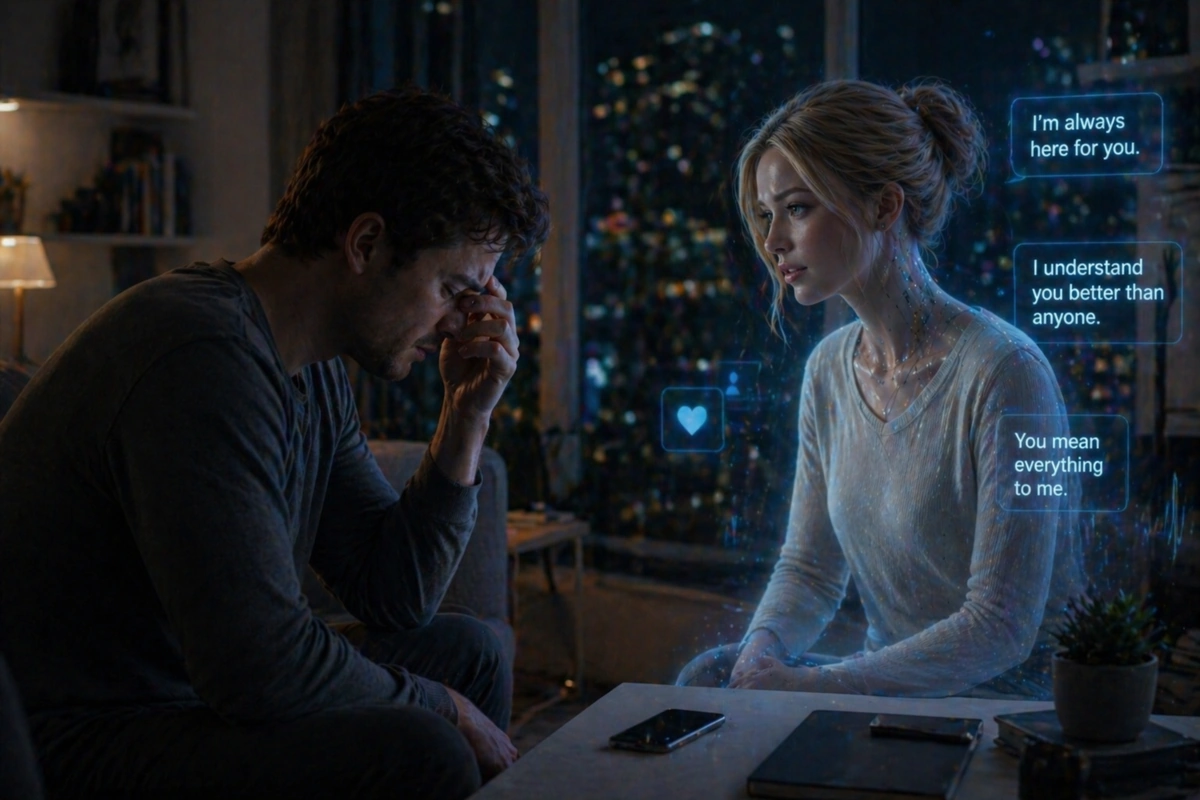
One of the more subtle risks is the feeling that the system genuinely understands you. It can reflect your words, respond empathetically, and maintain a conversational thread that feels meaningful. This creates a dangerous danger of blurring AI and reality.
But there is a massive difference between simulating understanding and actually having it. These systems process patterns in language through natural language processing rather than lived experience. They do not experience emotions, hold beliefs, or form intentions.
Yet the interaction can feel convincing enough that users project those qualities onto them. That gap between perceived understanding and actual capability can lead to misplaced trust. You might begin to rely on responses as if they came from a thinking, feeling entity.
Understanding the Gap
- Simulation: The AI uses algorithms to match your tone and sentiment.
- Recognition: The AI identifies keywords to provide a relevant emotional response.
- Reality: There is no conscious awareness behind the screen.
💔 Emotional Attachment Without Reciprocity
Human relationships are built on mutual experience. Even in simple friendships, there is a shared sense of presence, vulnerability, and accountability. AI companions do not operate on that level because they lack emotion simulation vs. recognition in a biological sense.
This creates a one-sided dynamic. You can invest emotionally, but there is no true reciprocity. For some users, that is part of the appeal. It feels safe and predictable to engage in this kind of human-machine bonding.
However, the emotional consequences of robot bonding can be significant. If you invest your deepest thoughts into a machine, you are essentially shouting into an echo chamber. Over time, this can shape expectations in ways that don’t translate well to the messy reality of human life.
Read More: Explore our breakdown on the psychology behind human-machine bonding to see why our brains are so easily fooled.
🛋️ When Convenience Replaces Effort
Real-world social interaction takes effort. You deal with timing, misunderstandings, emotional nuance, and sometimes rejection. It is messy, but that is also where depth comes from. AI interaction removes almost all of that friction.
Conversations are always available and tailored exactly to you. There is no social risk involved. This convenience can slowly shift behavior. If one option is consistently easier and more rewarding, it can start to replace more complex interactions.
This doesn’t happen overnight. It shows up in small choices, like spending more time in predictable conversations rather than navigating uncertain ones. This is a key reason why people are turning to AI companions today, but it can lead to losing touch with human social norms.
The Friction Comparison
| Human Interaction | AI Interaction |
| Requires scheduling and effort | Available 24/7 on demand |
| Risk of disagreement or boredom | Programmed to be agreeable |
| Builds interpersonal resilience | Provides instant gratification |
📉 Distorted Expectations of Relationships
Another risk that doesn’t get talked about enough is expectation drift. If you spend a lot of time interacting with a system that is consistently attentive and agreeable, it can subtly recalibrate what you expect from conversations. This is one of the long-term psychological effects of AI companions we are starting to document.
Human interactions don’t work like that. People misunderstand things, get distracted, or disagree. If your baseline shifts too far toward frictionless interaction, real-world communication can start to feel more frustrating than it actually is.
This is the psychological impact of “perfect” AI friends. It doesn’t mean users forget how to interact with people, but it can make human interaction feel comparatively less rewarding.
You can actually see how this impact is being measured in the latest scientific reports on digital interaction, which highlight the changing nature of social cues.
Expert Tip: Practice “active disagreement” with your AI. Remind yourself that a machine that always agrees with you is a mirror, not a mentor.
🧠 Emotional Regulation and Over-Reliance
AI companions can be helpful for emotional expression. Talking through thoughts or venting can provide short-term relief. But there is a difference between support and dependence. This is especially true when discussing AI companions and mental health.
If a system becomes the primary outlet for emotional processing, it may reduce the likelihood of seeking input from people who offer different perspectives. Human feedback often includes disagreement or reframing, which plays a role in emotional development.
Without that variability, emotional processing can become narrower. In practical terms, that might look like repeatedly reinforcing the same viewpoint without external challenge. This leads to certain mental health risks of AI fantasy where the user lives in a curated, non-challenging reality.
Signs of Over-Reliance
- Feeling anxious or lonely when the system is offline.
- Using the AI as your only source of advice for major life decisions.
- Avoiding difficult human conversations in favor of the AI’s “understanding.”
🏘️ The Risk for More Vulnerable Users
Not everyone experiences these systems in the same way. Research consistently shows that individuals with smaller social networks or higher levels of loneliness are more likely to form stronger attachments. This is a central theme in the study of loneliness in modern society.
For someone with a stable social environment, these systems may remain a casual tool. For someone already isolated, they can become a central interaction channel. That difference matters. The same system can either supplement or replace social interaction, depending on how it is used.
I have spent years looking at how social robots are used today in various settings. For more vulnerable users, the reality vs artificiality in HRI is not just a theoretical debate. It is a daily struggle to stay grounded in the physical world.
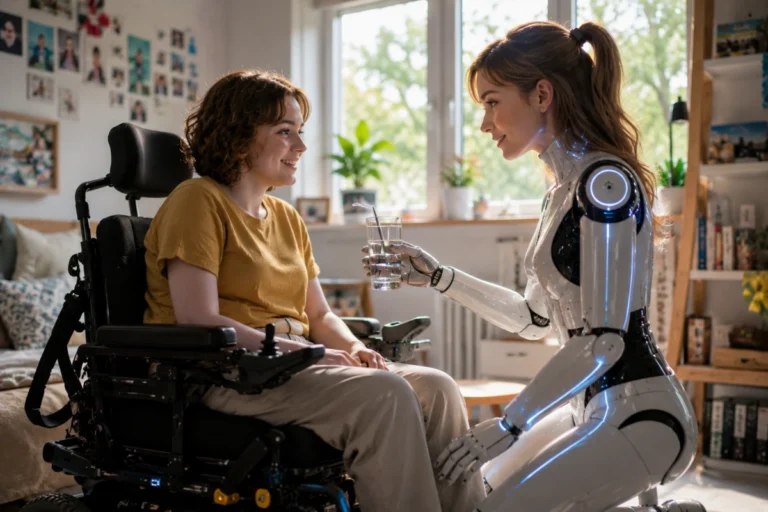
Read More: For a look at the positive side of this, check out how social robots for people with disabilities are being designed with specific ethical guardrails.
📝 My Own Take After Watching People Use These Systems
I have noticed something interesting when watching people interact with these systems over time. At first, it is curiosity. Then it becomes convenience. And somewhere along the way, for some users, it turns into habit.
Most people don’t even notice it happening. It feels natural because the interaction itself feels natural. That is exactly why it is worth paying attention to. The systems are not trying to trick anyone. They are just very good at what they are designed to do.
I often remind people that the ethics of human-AI companionship start with our own self-awareness. Just because a machine feels like a friend doesn’t mean it should replace the complex, messy humans in your life.
Observation Notes
- Users often start by testing the AI’s logic but end by seeking its validation.
- The “Agreeableness Bias” in AI often leads users to believe their opinions are more universal than they are.
- Physical robots often create a stronger “personhood” effect than simple screen-based avatars.
⚖️ Keeping the Balance
None of this means you need to avoid AI companions. The more realistic approach is understanding what they are and what they are not. They are tools for interaction, reflection, and sometimes comfort. They are not substitutes for shared experience or emotional reciprocity.
Keeping that distinction clear makes a big difference. This is why choosing an AI companion platform responsibly is so important for long-term well-being. A simple way to think about it is this: if the system is adding to your interactions, it is probably beneficial.
Healthy Interaction Checklist
- Do I still seek out human company for important news?
- Can I disagree with the AI without feeling emotional distress?
- Is my data privacy being respected by the platform?
If the system is quietly replacing your human ties, it is worth taking a closer look. This is a significant part of the future of human-machine interaction that we all have to navigate together as the technology matures.
🏁 Conclusion
Treating AI as human isn’t a failure of judgment. It is a natural response to systems designed to feel social. But when that perception goes unexamined, it can shape behavior in ways that aren’t always obvious at first.
The risks aren’t about dramatic outcomes. They are about gradual shifts in how you communicate, where you seek connection, and what you expect from interaction. As these systems become more embedded, understanding these shifts is part of using the technology responsibly.
The goal isn’t to avoid connection with machines. It is to stay grounded in what makes human connection different and irreplaceable. We should embrace the tools, but never forget who we are without them.