
🚀Why Startups Are Winning Over Big Tech in AI Companions

TLDR
- 📉 Market Velocity: Innovative AI companion startups are growing rapidly, with hundreds of new apps and strong user demand driving the category.
- ⚡ Iteration Speed: Startups move faster, iterate quickly, and focus deeply on emotional interaction rather than productivity.
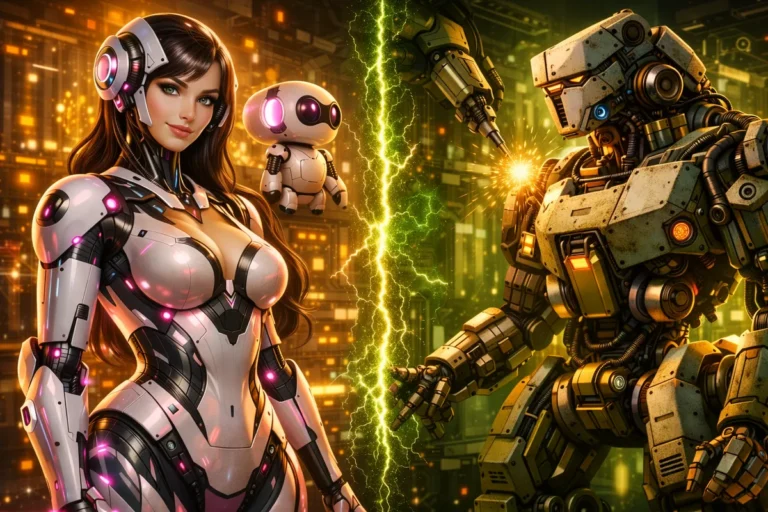
- 🧠 Strategic Gap: Big Tech companies prioritize scale, safety, and existing ecosystems, which can slow down innovation in companionship features.
- 🎯 User Experience: Startups often win on personalization and niche focus by building for “intimacy” from the ground up.
- 🏗️ Infrastructure Role: Big Tech still dominates infrastructure, but startups are shaping how people actually interact with AI companions.
At first glance, you’d expect the biggest technology companies in the world to dominate this space. They have the data, the infrastructure, the talent, and the money. And in many areas of AI, that’s exactly what’s happening. But when it comes to AI companions: systems designed for ongoing, human-like interaction: the story is a bit different.
Spend some time exploring what are companion robots actually being used day-to-day, and you’ll notice something surprising. A large portion of innovation, experimentation, and user engagement is coming from smaller, more focused teams.
So what’s going on here? Why are startups, not tech giants, shaping one of the most personal corners of this industry?
📈 A Market Growing Faster Than Expected
Before diving into the “why,” it helps to understand the scale of the future of the AI companion market. The AI companion app category has expanded rapidly, with hundreds of active platforms and a significant number launched in just the past year.
Consumer spending and downloads have surged, with millions of users engaging regularly.
This isn’t a niche anymore. It’s a fast-moving segment with real revenue and sustained usage patterns. And importantly, much of that growth in the competitive landscape of social robotics is happening outside the traditional Big Tech ecosystem.
Users are increasingly choosing an AI companion platform based on emotional resonance rather than brand name.
⚡ Speed Matters More Than Size
One of the clearest advantages startups have is speed. Building a companion system isn’t just about raw intelligence. It’s about interaction design, personality tuning, and constant iteration based on user behavior. These are areas where small teams can move quickly.
Innovative AI companion startups can test new features, adjust conversational styles, and refine user experience in days or weeks. Larger companies, by contrast, often operate on longer cycles. Every change has to pass through multiple layers: legal, safety, brand alignment, and integration with existing systems.
That difference adds up. When you’re building something as fluid as a conversational companion, iteration speed becomes a competitive advantage. This nimble vs massive AI development dynamic is why the most “human” interactions often come from the smallest teams.
💡 Expert Tip: When looking for a business setup abroad, look for jurisdictions with clear regulations on data, as how AI companions store and use your data is becoming a primary user concern.
🎯 Focus: Companionship vs Productivity
Big Tech companies tend to approach AI through a familiar lens: productivity. Their systems are designed to help you write emails, analyze data, manage tasks, or search for information. Even when they introduce conversational features, those features often sit on top of a utility-first framework. This leads to big tech’s struggle with artificial intimacy.
Startups, on the other hand, are building for companionship from the ground up. That might sound like a small distinction, but it changes everything. Instead of asking, “What task can this system help you complete?” startups ask, “Why would you want to talk to this every day?”
This shift leads to different design choices:
- Emotional Pacing: Understanding when to listen vs. when to speak.
- Tone Consistency: Maintaining a specific “persona” over long periods.
- Memory Depth: Prioritizing how AI companions learn over time about your personal life.
In practice, it often feels more natural, even if the underlying technology is similar.
🧩 Niche Focus Beats Generalization
Another reason why small companies lead in social AI is their willingness to go narrow. Big Tech tends to build general-purpose systems. They need products that work for millions: or billions: of users across different contexts. Startups don’t have that constraint.
They can focus on specific use cases: loneliness in modern society, conversational partners for language learning, character-based interaction, or even highly stylized personas tailored to particular communities.
Some top AI companion startups 2026 allow users to create and customize their own characters, which has proven especially popular. This level of specialization creates stronger engagement. Users don’t just use the system: they return to it.
| Feature | Startup Approach | Big Tech Approach |
| Primary Goal | Emotional Connection | Task Efficiency |
| User Base | Niche / Specialized | Mass Market |
| Personality | Flawed / Human-like | Safe / Corporate |
| Risk Tolerance | High Experimentation | High Compliance |
👥 Community-Driven Growth
A lot of successful companion platforms have something in common: they’re built with user participation in mind. Instead of delivering a fixed experience, they let users shape it. You can create characters, adjust personalities, and influence how the system behaves over time.
This creates a feedback loop. Users aren’t just consuming the product: they’re helping build it. From what I’ve seen testing these platforms, this makes a noticeable difference. The systems feel less like tools and more like evolving environments.
Big Tech companies have experimented with similar ideas, but it’s harder to implement at scale without running into moderation and safety challenges. This is where startups vs big tech in AI reveals a cultural gap: startups embrace the messiness of human-AI companionship ethics while giants run from it.
🛠️ Risk Tolerance and Experimentation
Startups can take risks that larger companies simply can’t. They can experiment with unconventional interaction styles, push boundaries in emotional engagement, and explore areas that might be considered too sensitive or uncertain for a global platform.
Big Tech companies operate under intense scrutiny. Every feature has to be safe, predictable, and aligned with regulatory expectations across multiple regions. That’s especially relevant in the companion space, where interactions can become deeply personal.
While startups still have to navigate regulation and future laws, they often operate with more flexibility in how they experiment before scaling.
🏗️ Infrastructure vs Experience
It’s important to be clear about one thing: Big Tech still dominates the underlying infrastructure. They provide the cloud platforms, the large-scale models, and the compute resources that make many of these systems possible.
But building the foundation and shaping the experience are two different things. Startups are focusing on the layer users actually interact with: the interface, the personality, the sense of continuity. That’s where differentiation happens. In many cases, startups are effectively building on top of technology developed by larger companies, but using natural language processing in more focused and creative ways.
💡 Quick Fact: Why small companies lead in social AI often comes down to “Memory.” While Big Tech flushes data for privacy, startups develop ways to store and use data to create a continuous life story with the user.
🧠 Emotional Design as a Core Discipline
Companion systems live or die by how they feel, not just how they function. Startups tend to treat emotional design as a primary concern. They spend time on conversational pacing, tone consistency, and memory features that make interactions feel continuous.
Some are even experimenting with evolving personalities, where the system changes subtly over time based on interaction patterns. This is not something Big Tech ignores, but it’s rarely their main priority. Their products are expected to perform reliably across many use cases, which can limit how deeply they invest in any single interaction style.
This is why the future of the AI companion market currently belongs to those who prioritize what makes an AI feel human over what makes it fast.
🏁 Conclusion
If you’re wondering why startups seem to be ahead in the startups vs big tech in AI race, it comes down to a few simple factors: speed, focus, and willingness to experiment. They’re not trying to build everything. They’re trying to build something specific and make it feel right.
Big Tech isn’t out of the picture. Far from it. But in this particular space, the advantage goes to those who can move quickly, adapt constantly, and design for something that’s still being defined in real time.
And right now, that tends to favor the nimble vs massive AI development teams at the world’s top AI companion startups 2026.
Read Also: Where AI companionship is likely headed next