🎙️How Speech-to-Text Accuracy Impacts User Experience

TLDR
- Speech-to-text accuracy directly shapes how natural and usable voice-based companions feel.
- Even small transcription errors can break trust and disrupt conversations quickly.
- Background noise, accents, and context handling remain major technical challenges.
- Higher accuracy improves not just usability, but emotional engagement and user retention.
- The best systems combine acoustic modeling, language prediction, and personalization to reduce errors.
You can have the most advanced companion device in the world, packed with expressive responses and clever features, but if it constantly mishears you, none of that really matters.
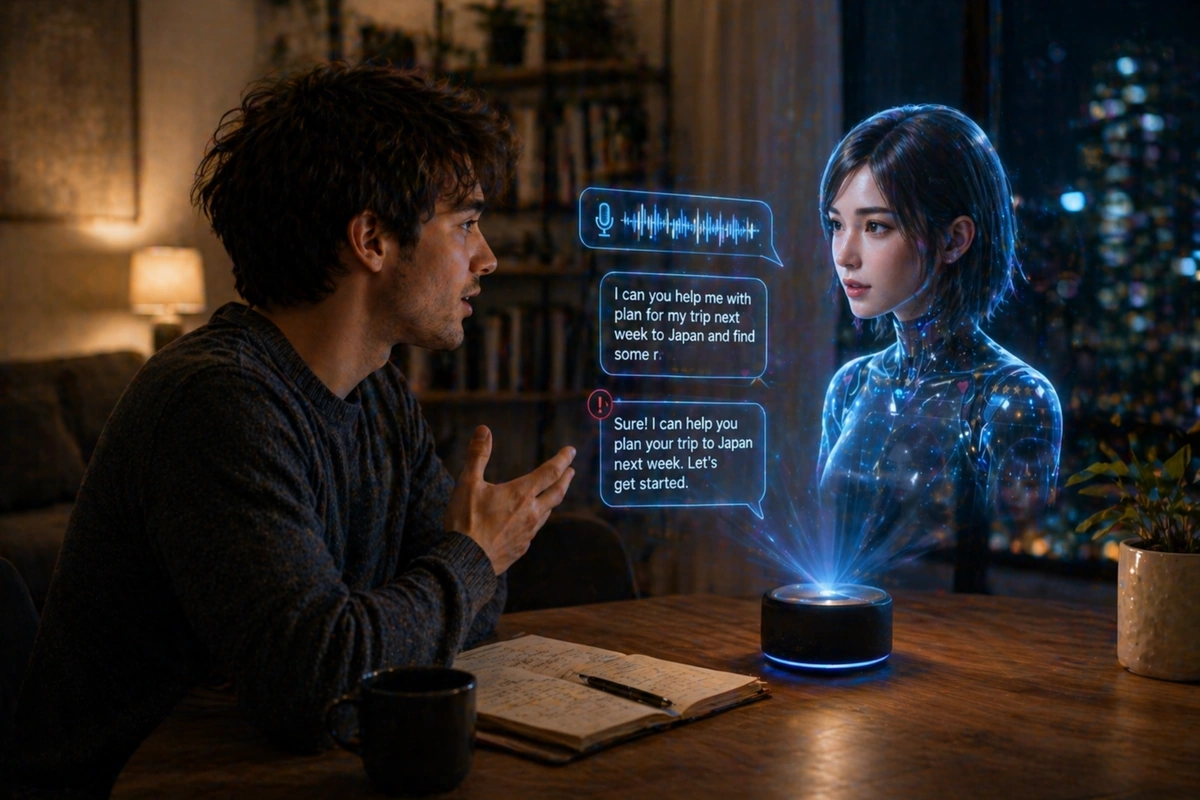
Speech-to-text sits right at the front door of the experience. It’s the first step in every interaction. If that step fails, everything downstream suffers. Users notice it instantly.
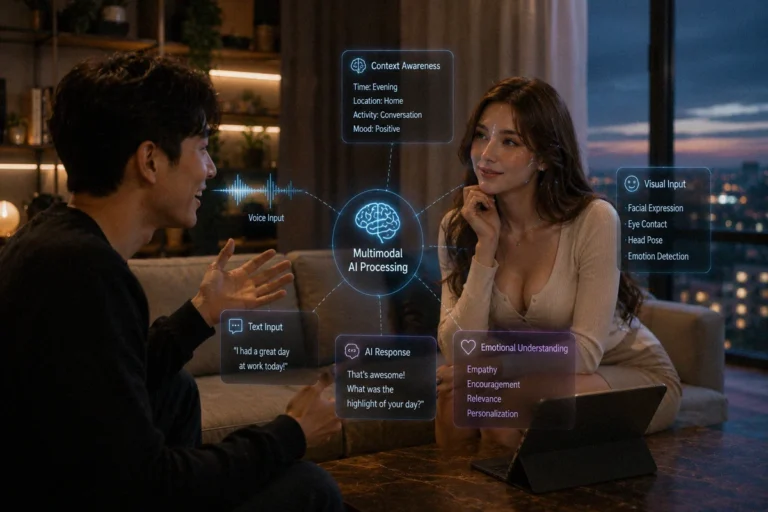
You don’t need technical knowledge to feel when something is off. One wrong word, one awkward misunderstanding, and suddenly the illusion of a smooth, conversational system disappears. This is why speech-to-text accuracy in AI isn’t just a technical metric; it is the backbone of the entire product.
The Voice Interaction Flow
| Stage | Component | Potential Failure Point |
| Input | Microphones | Background noise interference |
| STT | Transcription Engine | Phonetic misinterpretation |
| NLP | Intent Processing | Misheard context leading to wrong action |
| Output | Voice Synthesis | Disconnect between user intent and AI tone |
🗣️ Why Accuracy Feels Personal
When a system misunderstands you, it doesn’t feel like a neutral technical error. It feels like it didn’t listen. That might sound dramatic, but it is a real psychological effect rooted in the psychology behind human-machine bonding.
Humans are wired to interpret conversation as intentional. So, when your words are misinterpreted, the experience can feel frustrating in a very human way.
You’ll often see users adjust their behavior quickly. They start speaking more slowly or simplifying sentences. Over time, that changes the entire interaction dynamic.
Instead of a natural conversation, it becomes a kind of careful negotiation. This is a primary reason why conversation quality matters more than appearance when it comes to long-term satisfaction.
Read More: For a deeper look at the tech behind the talk, see how natural language processing allows robots to translate sounds into meaning.
🏔️ The Compounding Effect of Small Errors
One of the less obvious issues with speech recognition is how errors stack up. A single misheard word might not matter much, but in a multi-turn interaction, those small inaccuracies accumulate. Context gets distorted, and intent becomes unclear.
For example, if a system mishears a name or a key detail early in a conversation, everything that follows can drift further off track. The user ends up correcting the system repeatedly, which adds friction.
This is often where users lose patience, not because of one mistake, but because the system can’t recover smoothly. It highlights the significant impact of STT on user experience.
Common Recovery Frustrations
- Looping: The AI repeats the same misunderstanding multiple times.
- Misdirected Action: Executing a command for a different user profile.
- Context Loss: Forgetting the topic because a key noun was misheard.
🔊 Noise Cancellation and Social Robots
Real-world environments are messy. People don’t speak in quiet, controlled conditions. Background noise, overlapping conversations, TV audio, and even wind can interfere with speech recognition. While modern systems handle noise better than they used to, troubleshooting AI hearing in a busy living room remains a top priority for developers.
This is where advanced microphone arrays and noise cancellation and social robots technology come into play. There is always a trade-off between filtering noise and preserving the clarity of the user’s voice. Without high-quality hardware, what limits current AI companions technologically becomes very apparent very quickly.
Expert Tip: Place your companion device away from humming appliances like refrigerators or AC units to significantly improve its listening capabilities.
🌍 Accents, Dialects, and Inclusivity
Another critical factor is how robots understand accents. Speech recognition models are trained on large datasets, but those datasets aren’t always perfectly balanced.
Some accents are better represented than others. When a system consistently struggles with certain speech patterns, it creates a very uneven user experience.
This is not just a technical issue; it has real implications for social acceptance of AI companions. Recent developments in multilingual voice recognition have aimed to bridge this gap, ensuring that a user’s heritage doesn’t dictate the quality of their technology.
Improving accuracy across diverse speech patterns is one of the most important areas of development in 2026.
Inclusivity Metrics
- Dialectal Variation: Handling slang and regional vocabulary.
- Pitch and Pace: Adapting to high-pitched voices or faster speaking rates.
- Non-Native Speech: Recognizing patterns from users speaking a second language.
⚡ Latency and the Hidden Layer of Context
Accuracy isn’t just about getting the words right; it is also about how quickly the system processes them. If there’s a noticeable delay, the conversation starts to feel unnatural. Modern systems now use advanced logic to predict what the user is likely to say based on context.
For example, if you’re talking about music, the system is more likely to correctly recognize artist names. This is where STT blends with higher-level understanding.
Without this context, the problems with voice recognition in social AI become much harder to overcome. By interpreting meaning rather than just sounds, the AI can bridge the gap between “hearing” and “understanding.”
Read More: Learn how systems learn over time to better predict your specific conversational needs.
🧩 Improving Robot-User Communication
Another factor that often gets overlooked is personalization. Systems that adapt to your voice over time tend to perform better. They learn your pronunciation patterns, your common phrases, and even your speaking pace. This is why many people form emotional attachments to AI, it feels like the system finally “gets” them.
However, no system is perfect, so error handling is vital. The best systems don’t just fail; they ask for clarification in a way that feels natural. This is essential in specialized fields, such as when AI companions are used in elder care today, where clear communication is a safety requirement.
Developers often use various voice interaction resources to refine how these synthetic voices prompt users for missing information without being annoying.
Personalized Adaptation
| Adaptation | User Benefit |
| Lexicon Learning | Recognizing unique names or jargon. |
| Prosody Mapping | Understanding your unique vocal rhythm. |
| Noise Profiling | Filtering out consistent sounds in your specific home. |
❤️ The Emotional Layer of Accuracy
In companion devices, accuracy has an emotional dimension. When a system consistently understands you, it creates a sense of reliability. This is the role of clear speech in AI bonding. On the flip side, frequent misunderstandings can create subtle frustration that builds over time.
This is especially important in products designed for long-term engagement, like those used to reduce loneliness long-term. If the interaction feels smooth, users keep coming back. If it feels clunky, they drift away. Small imperfections stand out more in voice interaction than they do in other interfaces.
Expert Tip: To help your AI, try to reduce “filler” words like “um” or “uh,” which can occasionally confuse older transcription models.
🏁 Conclusion
Speech-to-text accuracy is the foundation of the entire user experience. It shapes how natural conversations feel and determines whether a system becomes a daily companion or something abandoned after a few tries.
As these systems move further into real-world environments, the challenges of noise, accents, and context become more complex. But the direction is clear: improving robot-user communication is what makes these systems actually useful.
If you’re choosing an AI companion platform responsibly, the quality of its “hearing” should be at the top of your checklist. When it works well, you barely notice it, and that’s the ultimate goal.