
🤖 Subscription-Based vs Hardware AI Companions

TLDR
- Subscription-based AI companions are software-driven, continuously updated, and accessible across devices with lower upfront cost.
- Hardware AI companions offer physical presence, embodiment, and spatial interaction but require higher initial investment.
- Software companions evolve rapidly due to cloud-based updates, while hardware systems are limited by physical components and upgrade cycles.
- User experience differs significantly: apps focus on conversation depth, robots emphasize presence and interaction in real space.
- The future likely combines both models, blending persistent software intelligence with increasingly capable physical platforms.
If you’ve spent any time exploring AI companions lately, you’ve probably noticed something: they come in two very different forms.
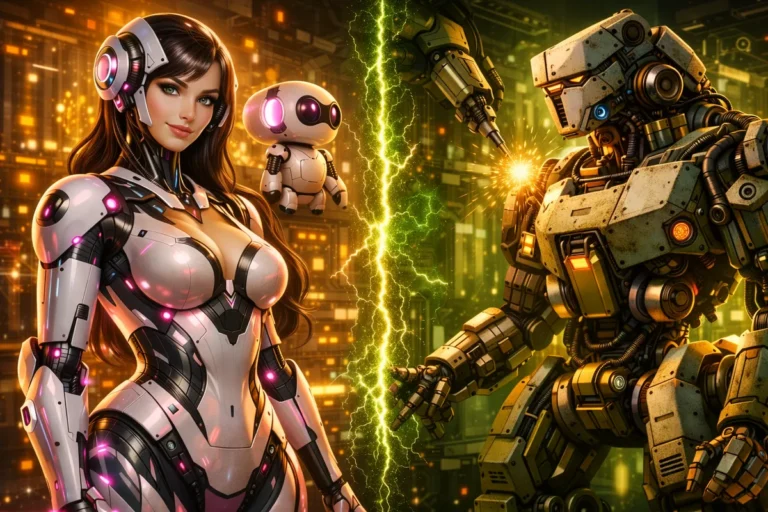
On one side, you have subscription-based platforms. These live on your phone, laptop, or browser. They update frequently, evolve quickly, and are often just a tap away.
On the other side, there are hardware, local companions. Physical robots that sit on your desk, move around your home, or respond to your voice in real space.
At first glance, they might seem like variations of the same idea. In reality, they represent two very different approaches to human-machine interaction.
Understanding the differences between these models helps clarify where the technology stands today and where it might be heading.
🔑 The Core Difference: Software vs Physical Presence
The most obvious distinction is also the most important when comparing subscription vs hardware AI companions.
Subscription-based companions exist entirely as software. You interact with them through screens, speakers, or text interfaces. Their “presence” is conversational rather than physical.
Hardware companions, by contrast, exist in your environment. They occupy space. They move, gesture, and sometimes even respond to touch.
This difference changes the entire experience. Talking to a software companion feels like opening a conversation. Interacting with a robot feels more like sharing space with something that responds to you.
Both approaches aim to create engagement, but they do so in very different ways. This divergence influences why people form emotional attachments to AI in digital versus physical forms.
| Dynamic | Software Companions | Hardware Companions |
| Primary Interface | Mobile apps, web browsers, chat boxes | Mechanical bodies, moving parts, lenses |
| Environmental Footprint | Zero physical footprint on your desk | Occupies real physical space in a room |
| Sensory Interaction | Text inputs and spoken audio lines | Gestures, reactive lighting, and motion |
🚀 Subscription-Based Companions: Always Evolving
One of the biggest advantages of subscription-based AI companions is their ability to improve continuously.
Because these systems run on cloud infrastructure, developers can update models, refine responses, and add features without requiring any action from the user.
You might open an app one day and notice the conversation feels more natural than it did the week before. That is the benefit of centralized updates.
This rapid iteration cycle allows software companions to evolve quickly. It is a major factor driving the value of hardware-based AI down if local components cannot keep pace.
It also means that most cutting-edge developments in conversational technology appear first in software platforms before reaching hardware systems.
- Instant Hotfixes: Natural language bugs can be patched instantly on the server side.
- Model Migrations: Upgrading the underlying brain from old models to newer architectures happens seamlessly.
- Feature Rollouts: Adding tools like image generation or custom memory modules requires zero user downloads.
💰 Accessibility and Cost Considerations
Subscription-based companions are generally easier to access for the average consumer.
You do not need to purchase an expensive device. In many cases, you can start using the system immediately with a free tier or a relatively low monthly fee.
This lowers the barrier to entry significantly. It forces consumers to weigh the pros and cons of AI subscriptions versus physical ownership.
Hardware companions, on the other hand, require a massive upfront investment. Even relatively simple social robots can be expensive due to sensors, motors, and manufacturing costs.
The high cost of companion robots plays a major role in choosing between the two formats. For many users, that price difference dictates their final decision.
Software platforms offer flexibility through a low-risk monthly vs one-time AI purchase model. Hardware systems require a serious upfront commitment.
Expert Tip: Before putting down hundreds of dollars on equipment, analyze how to compare AI companion pricing models before you buy to avoid overpaying for basic processing power.
🗣️ Depth of Conversation
When it comes to conversation quality, subscription-based systems often have the edge.
Because they rely on large-scale language models running in the cloud, they can process more context and generate more nuanced responses.
These systems are designed for extended dialogue. They remember past interactions, adapt to your communication style, and often support long, complex conversations.
Hardware companions can also support conversation, but they are sometimes constrained by onboard processing limits or connectivity requirements.
In practice, many hardware systems rely on cloud-based processing as well. However, the experience is often optimized for shorter interactions rather than extended dialogue.
This gap shows why conversation quality matters more than appearance in AI companions when users look for deep intellectual engagement.
- Context Retention: Software models often boast massive windows to remember weeks of talk history.
- Linguistic Nuance: Cloud engines are highly optimized for capturing sarcasm, subtle hints, and complex cultural idioms.
- Processing Speeds: Massive server banks can generate long-form responses without causing massive conversational pauses.
🏃 The Power of Physical Presence
Hardware companions offer something software cannot replicate: true physical embodiment.
A robot can turn its head toward you, react to movement, or sit quietly in a room until you engage with it. That physical presence changes how people perceive the interaction.
Research in social robotics consistently shows that embodiment increases acceptance and engagement. This is a primary driver behind the psychological value of hardware-based AI.
Even simple movements, like a robot looking in your direction or responding to touch, can make the interaction feel more immediate.
For some users, that physical aspect creates a stronger sense of companionship than a purely digital conversation ever could. This dynamic underpins the core mechanics of what makes an AI companion feel human to its owner.
Read More: To better understand how physical forms influence our minds, check out this look at the psychology behind human-machine bonding across different types of interfaces.
🎭 Interaction Beyond Words
Another advantage of hardware systems is multimodal interaction.
Software companions rely primarily on text or voice inputs. Hardware companions can incorporate gestures, lights, movement, and environmental awareness.
For example, a robot might approach when you enter a room, respond to being picked up, or express emotion through movement patterns.
These nonverbal cues add another layer to the interaction. They do not replace conversation, but they complement it in ways that feel more natural to human social behavior.
This multi-sensory feedback explains why movement matters more than looks in social robots built for domestic environments.
| Sensory Channel | Software Application | Hardware Robot |
| Visual Input | Static avatars or text boxes on a flat glass screen | Camera lenses that track physical objects and faces |
| Auditory Input | Simple audio streaming triggered via a user tap | Directional microphones that locate sounds in space |
| Physical Output | Standard screen vibrations or simple push alerts | Real-world locomotion, motorized head tilts, and arm arcs |
⚠️ Limitations of Hardware Systems
Despite their obvious appeal, hardware companions face several practical limitations.
Development cycles are slower. Updating physical components requires new manufacturing rather than simple software updates.
Battery life, durability, and maintenance also become factors. A robot needs to be charged, cleaned, and occasionally serviced.
There is also the issue of longevity when analyzing subscription vs hardware AI companions. A smartphone app can evolve for years. A hardware device may feel outdated if its internal components cannot keep up with advances in AI models.
These constraints mean hardware systems tend to evolve more gradually than their software counterparts. They are prone to specific structural hurdles, which explain why companion robots struggle with real-world environments like cluttered rooms.
- Battery Degradation: Internal lithium cells slowly lose capacity, requiring constant dock visits.
- Mechanical Friction: Motor gears wear down over time, leading to squeaking or physical failure.
- Component Obsolescence: Onboard computer processors quickly fall behind the fast-paced curve of modern machine learning requirements.
🔒 Privacy and Data Considerations
Both models raise important questions about data handling, but the context differs slightly.
Subscription-based companions process conversations through cloud servers. This allows for powerful computation but requires transmitting user data over networks.
Hardware companions may include cameras, microphones, and sensors that operate within your physical environment. That introduces additional considerations about how data is collected and stored.
In both cases, transparency from developers is critical. Users need to understand how their interactions are being processed, stored, and potentially used to improve the system.
This data footprint forms a core part of the known privacy risks of AI companions that consumers must manage carefully.
Expert Tip: Review the privacy policy to check whether a machine uses local edge computing or streams raw household footage directly to corporate databases.
🙋 My Experience Comparing Both
After spending time with both app-based companions and physical robots, the contrast becomes very clear.
Software companions tend to excel in conversation. You can dive into long discussions, explore ideas, or simply chat for extended periods without friction.
Hardware companions feel different. The interaction is less about depth and more about presence. Even a simple greeting or small movement can make the experience feel more tangible.
Neither approach is strictly better. They serve different purposes based on why people are turning to AI companions in their daily routines.
Some days you might want a deep conversation. Other times, a simple physical presence in the room can be enough to change the atmosphere.
- App Interactions: Best suited for midnight journaling, brainstorm sessions, and language practice.
- Robot Interactions: Best suited for passive desk decoration, interactive wake-up calls, and ambient home tracking.
- Hybrid Workflows: Utilizing an app while away from home, then switching to a desktop unit at night.
🔄 Where the Two Models Are Converging
Interestingly, the line between these two categories is starting to blur.
Many hardware companions now rely heavily on cloud-based AI systems for conversation. At the same time, software platforms are experimenting with visual avatars and more immersive interfaces.
The long-term direction seems to point toward hybrid systems. Imagine a physical robot powered by continuously updated cloud intelligence.
You get the best of both worlds: strong conversational ability combined with physical presence. This setup justifies the high cost of companion robots by packing premium AI companion features into an enduring shell.
Several companies are already working toward this model, transforming the baseline comparison of owning vs renting a robot into a blended experience.
Read More: To explore how this fusion alters standard technological categories, look into the specific differences between domestic robots vs companion robots in the modern space.
💼 Use Cases: Choosing the Right Fit
The choice between subscription-based and hardware companions often comes down to your primary use case.
If you are primarily interested in conversation, reflection, or idea exploration, software platforms are usually the better fit. They are flexible, accessible, and constantly improving.
If you value physical interaction, presence, or engagement in a shared space, hardware companions offer something unique.
In settings like elder care, education, or therapy support, physical robots can provide benefits that software alone cannot replicate. This split determines what features actually matter in an AI companion based on the setting.
Understanding your own expectations is key to choosing the right type of companion for your home or office.
| Ideal Target User | Recommended Format | Primary Benefit |
| Writers & Researchers | Subscription Software | Deep contextual text memory and swift cross-referencing capabilities |
| Isolated Seniors | Hardware Social Robot | Visible physical engagement, routine reminders, and ambient fall tracking |
| Tech Enthusiasts | Hybrid Ecosystem | Multi-device text access coupled with an interactive desktop mechanical unit |
🔮 The Future Outlook
Both models are likely to continue evolving in parallel.
Software companions will keep improving rapidly as language models advance. Hardware companions will become more capable as robotics technology progresses and costs decrease.
Over time, integration between the two will likely become standard. This evolution will alter the monthly vs one-time AI purchase choice into unified lifetime memberships.
The idea of separating software and hardware may eventually feel outdated. Instead, users will interact with systems that combine conversational intelligence with physical embodiment seamlessly.
This shift will influence the social acceptance of AI companions as these machines integrate deeper into public and private lives.
- Smarter Backends: Local robots getting direct software links to advanced multi-modal models.
- Cheaper Actuators: Drop in manufacturing costs leading to more affordable physical joints and limbs.
- Unified Identity: A single companion persona that travels from your phone screen straight into your home robot without losing its memory.
🎯 Conclusion
Subscription-based and hardware AI companions represent two distinct approaches to the same goal: creating engaging, interactive systems that people want to spend time with.
Software platforms excel in conversation, adaptability, and accessibility. Hardware companions offer presence, embodiment, and interaction beyond words.
Each has its strengths and limitations. Rather than competing directly, they are gradually converging toward a hybrid model that blends the best aspects of both.
As the technology continues to mature, the distinction between talking to a system and sharing space with it may become less pronounced. For now, understanding these differences helps you navigate a rapidly evolving landscape and decide what kind of interaction you actually want.