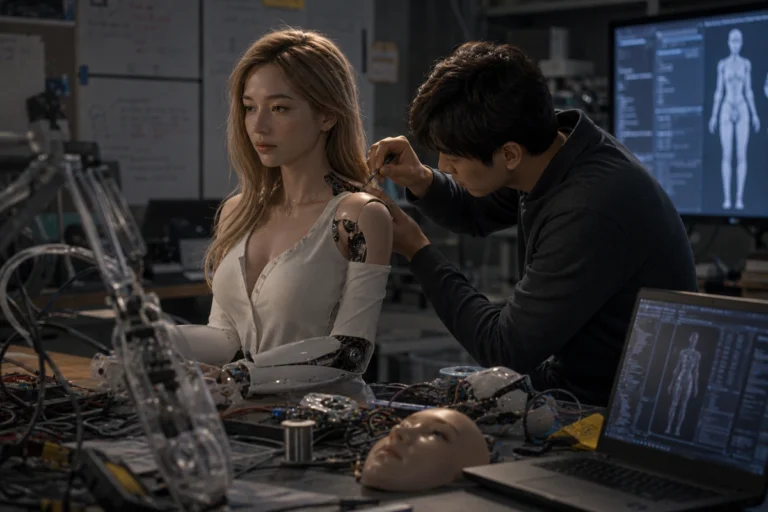
🤖Why Companion Robots Break Down in Unstructured Settings

TLDR
- Companion robots perform best in controlled environments but struggle when faced with unpredictable real-world situations.
- Unstructured settings introduce endless variables, including changing lighting, clutter, noise, and human behavior.
- The gap between simulated training environments and reality remains one of robotics’ biggest engineering challenges.
- Perception, navigation, object handling, and social interaction become significantly harder outside carefully designed conditions.
- Advances in sensing, edge computing, simulation, and adaptive learning are helping robots become more resilient, but true real-world robustness remains a work in progress.
Watch a companion robot at a trade show and you might come away convinced that the future has already arrived. The robot greets visitors, answers questions, follows instructions, and navigates smoothly through its environment. Everything appears effortless.
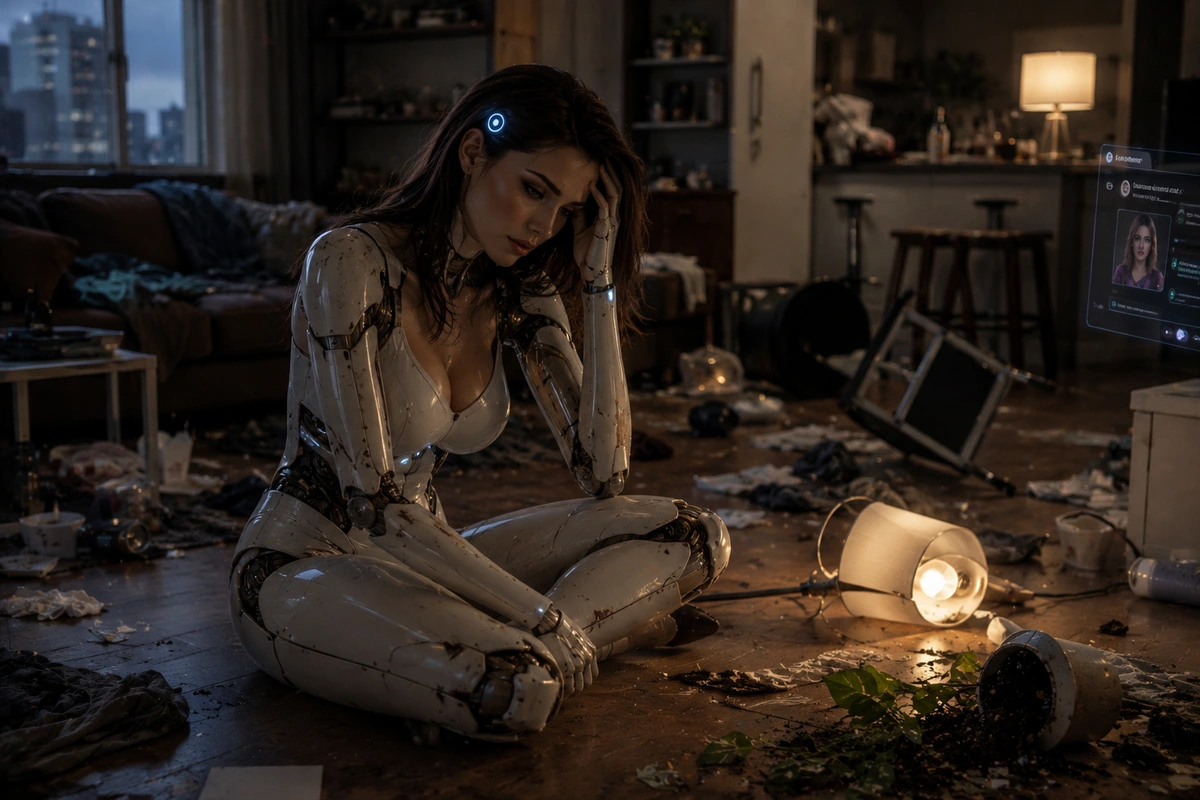
Then you place that same robot in a busy family home. A child leaves a backpack on the floor. The lighting changes throughout the day. The television is running in the background. Someone moves a chair. A pet wanders through the room. Suddenly the robot’s performance looks very different.
This contrast highlights one of the biggest realities in robotics today. Robots often perform impressively in structured environments but struggle when confronted with the unpredictability of everyday life.
For companion robots in particular, this challenge is enormous. Their entire purpose is to function around people, and people create some of the most dynamic and difficult environments imaginable.
🧭 The Difference Between Structured and Unstructured Environments
A structured environment is one where conditions remain relatively predictable. Factories are a classic example. Objects are usually placed in known locations. Workflows follow predefined patterns. Lighting is consistent. Human movement is often regulated. Many robots excel in these settings because variability is limited.
Unstructured environments are different. Homes, hospitals, schools, offices, and public spaces constantly change. Objects move. Furniture gets rearranged. People behave unpredictably. New situations emerge every day.
For humans, adapting to these changes feels effortless. For robots, every unexpected variable creates another opportunity for failure, highlighting why robots break in unstructured settings.
🏠 Environment Variables: Controlled vs. Chaotic
- Predictability Threshold: Factories limit access to ensure operations run smoothly, whereas domestic spaces embrace constant, random changes.
- Layout Consistency: Industrial machinery relies on static floor plans, but home spaces change layout every time a chair is pulled out.
- Operational Flow: Production lines move along predefined paths, while residential spaces lack fixed paths or schedules.
That is why robotics researchers frequently describe real-world deployment as fundamentally harder than laboratory demonstrations. Even small environmental changes can produce outsized effects on robot performance. When analyzing ai companions vs traditional robotics, this distinct environmental gap is the first major hurdle developers must face.
👁️ Vision Systems Are Easier to Fool Than You Might Think
One of the first things that tends to break down is perception. Companion robots rely heavily on cameras and sensors to understand their surroundings. While modern computer vision has improved dramatically, perception remains far from perfect.
Humans instantly recognize a coffee mug whether it is sitting on a table, partially hidden behind a book, or lying on its side. Robots often struggle with those variations.
Lighting changes alone can create significant difficulties. Morning sunlight, evening shadows, reflections from windows, and dim indoor conditions all alter how objects appear. A room that looks nearly identical to you may look entirely different to a robot’s perception system, showcasing how sensor failure in everyday life can disrupt normal operations.
Expert Tip on Visual Guidance: To keep an artificial assistant running accurately, ensure its primary operating space has uniform, diffused lighting. Sharp shadows or harsh reflections are common triggers for spatial confusion.
This problem becomes even more challenging when multiple variables combine. Poor lighting, clutter, motion, and unusual object positions can confuse systems that performed flawlessly during testing. It reminds us of the biggest hardware limitations in todays companion robots, where standard optical arrays cannot keep up with human visual intuition.
🎒 Clutter Creates Chaos
Humans are surprisingly good at operating in messy spaces. Most of us can walk through a cluttered room without consciously calculating every step. We automatically interpret obstacles and adjust our movements. Robots do not possess that same intuitive flexibility.
Companion robots often rely on maps and environmental models to navigate safely. When objects appear unexpectedly, those maps become less reliable. A pile of laundry on the floor might seem insignificant to you.
For a robot attempting to navigate autonomously, it becomes a new obstacle that may not exist in its internal understanding of the environment. The challenge of messy homes for robots turns basic movement into a complex puzzle.
| Messy Obstacle Type | Human Reaction | Robot Reaction |
| Loose Floor Cables | Step over or nudge aside | Caught in wheels, causing motor stall |
| Discarded Clothing | Gently push down or walk around | Scans as a solid wall, blocking paths |
| Moving Pets | Track via peripheral vision, step away | Freezes path planning due to sensor noise |
As clutter increases, uncertainty increases as well. The result is often slower movement, navigation errors, or complete failure to complete a basic task. This navigation issue is one reason why consumers must understand domestic robots vs companion robots key differences before assuming a social model can tidy a room or traverse a messy floor.
👥 Humans Are the Most Unpredictable Variable
Ironically, the very people companion robots are designed to help are often their greatest challenge. Humans behave in ways that are remarkably difficult to predict. We stop suddenly while walking. We change our minds mid-conversation. We gesture unexpectedly. We move objects without warning.
Children are especially challenging. A child may run toward a robot, move around it unpredictably, or interact with it in ways that engineers never anticipated during testing. Adults are not much easier. People interrupt conversations, use sarcasm, speak ambiguously, and provide incomplete instructions.
📖 Read More: To discover how automated models attempt to decode chaotic human inputs, see our breakdown on natural language processing explained for non engineers.
Companion robots must process all of this in real time while maintaining safe and socially appropriate behavior. That is an extraordinarily difficult engineering problem, demonstrating why social robots need “safe” zones where variables are limited.
This unpredictable human interface explains the psychology behind human machine bonding, as users expect human-like adaptability from machines that operate on cold math.
🔊 Sound Is Messier Than It Seems
Voice interaction is often presented as one of the defining features of companion robots. In controlled demonstrations, speech recognition can appear remarkably capable. Real homes tell a different story. Televisions create background noise. Multiple people speak simultaneously. Kitchen appliances run. Pets bark. Music plays. All of these sounds compete for attention.
Humans are exceptionally good at filtering noisy environments. We can focus on one conversation while ignoring dozens of irrelevant sounds. Robots continue to struggle with this task.
Speech recognition technology has improved substantially over the past decade, but noisy real-world environments remain challenging, particularly when multiple voices overlap. The result can be misunderstood commands, delayed responses, or failed interactions.
🎙️ Common Domestic Audio Distractors
- Acoustic Reflections: Bare hardwood floors and high ceilings bounce sound waves around, muddling the original vocal signal.
- Overlapping Vocal Frequencies: Cross-talk from a television or radio closely mimics human vocal patterns, tricking internal software.
- Mechanical Interference: Low-frequency hums from refrigerators or air conditioners can mask the wake word entirely.
When audio clarity fails, the reliability of robots in dynamic environments plummets. This limitation shows why conversation quality matters more than appearance in ai companions, as an attractive machine is useless if its microphone array cannot distinguish a command from background noise.
🖐️ Object Manipulation Remains a Major Hurdle
Picking up objects sounds simple until you ask a robot to do it in the real world. In laboratory settings, robots often interact with known objects under carefully controlled conditions. Real environments rarely cooperate. Objects vary in shape, size, texture, weight, and position. Items may be partially obscured. They may move unexpectedly when touched.
Even something as simple as grasping a dropped television remote can become surprisingly difficult. Contact forces, friction, object orientation, and physical variability all influence success rates. This struggle reveals the absolute core of hardware vs real-world chaos, where software algorithms cannot perfectly predict physical friction.
Expert Tip on Hardware Care: When setting up an automated helper, avoid purchasing delicate or slick glass accessories. Sticking to matte, easy-to-grip objects lowers the rate of physical dropping incidents.
Researchers continue to identify manipulation and contact dynamics as some of the hardest problems in real-world robotics. When evaluating what are companion robots capable of achieving today, simple object pickup remains an elite, complex tier of mechanical engineering.
🖥️ The Simulation Problem
Many modern robots learn through simulation before being deployed into physical environments. Simulation offers enormous advantages. It is safer, cheaper, and faster than training directly on hardware. The challenge is that simulations are approximations.
No matter how detailed a virtual environment becomes, reality contains countless small factors that are difficult to model accurately. Sensor noise differs. Lighting changes. Materials behave differently. Motors experience wear. Objects shift unpredictably.
Researchers often refer to this issue as the sim-to-real gap, which remains a massive technical bottleneck. For a deeper look at this transition, companies frequently publish data on overcoming training gaps in physical environments for autonomous systems.
📖 Read More: To explore how virtual sandboxes are evolving to mimic physical world variables, examine recent developments in advanced robotics simulation models.
A robot that performs exceptionally well in simulation may encounter unexpected failures once exposed to real-world conditions. Closing this gap is essential to stopping why robots break in unstructured settings, ensuring that virtual wisdom translates into physical reliability.
💬 Social Interaction Is Harder Than Navigation
When people think about robotics challenges, they often picture physical movement. Yet social interaction may be even more difficult. Companion robots must understand timing, conversational flow, attention, and social cues. Humans constantly exchange subtle signals, such as eye contact, facial expressions, tone of voice, body posture, and pauses in conversation.
We process these signals automatically. Robots do not. Even highly capable systems can miss context that humans interpret effortlessly. A delayed response can feel awkward. A poorly timed interruption can feel rude. A misunderstood emotional cue can derail an entire interaction.
| Social Cue | Human Interpretation | Machine Challenge |
| Sarcastic Tone | Recognizes inverted meaning instantly | Reads literal dictionary definition |
| A Brief Pause | Waits for the speaker to finish | Assumes turn is over, interrupts |
| Glancing Away | Detects distraction or boredom | Requires wide-angle tracking to log |
Social intelligence requires much more than language processing. It requires understanding the complex dynamics of human behavior. This explains why developers invest so much time balancing emotion simulation vs emotion recognition in ai, attempting to give circuits a glimpse of human empathy.
🔋 Hardware Has Limits Too
Not every failure originates in software. Companion robots operate under significant hardware constraints. Battery life limits operating time. Processing power limits real-time decision-making. Sensors have finite accuracy. Motors experience wear. Cameras have blind spots. Microphones have range limitations.
These constraints become more apparent in unpredictable environments because the robot must continuously adapt to changing conditions. Every additional challenge increases computational demands. Every additional demand consumes energy. Eventually, tradeoffs become unavoidable, underscoring the fragility of social hardware when pushed past its limits.
🛠️ Hardware Vulnerability Points
- Processor Throttling: Running deep localization algorithms in messy rooms rapidly overheats internal chips.
- Gear Degradation: Continually climbing over thick carpets or doorway lips wears down light joints.
- Sensor Blindspots: Low-profile bases often lack sensors to see tiny objects sitting directly underneath their chassis.
Navigating these hardware realities is part of responsibly maintaining your companion robot. If you understand the structural constraints of your device, you can alter your home environment to protect its delicate moving parts from hardware vs real-world chaos.
📈 Progress Is Happening Faster Than Many Realize
Despite these challenges, companion robotics continues advancing rapidly. Improved sensors provide richer environmental awareness. More sophisticated simulation systems help expose robots to greater variability before deployment. Edge computing reduces latency and enables faster local decision-making.
Machine learning models increasingly generalize across diverse environments rather than relying on narrow training conditions. Researchers are also investing heavily in adaptive systems that can learn from real-world experiences after deployment. The goal is not perfection. The goal is resilience.
Expert Tip on Future Integration: When shopping for new automation tools, prioritize models that receive regular over-the-air firmware updates. These upgrades often include improved pathfinding profiles based on real-world crowd-sourced data.
A useful companion robot does not need to handle every possible situation flawlessly. It needs to recover gracefully when things go wrong. That distinction is important as we look ahead to what to expect from ai companions in the future.
🏢 Why Startups Are Pushing the Boundaries
An intriguing trend in modern automation is how smaller entities are adapting to unstructured settings faster than established giants. Legacy companies often design systems with rigid, industrial mentalities. They assume environments can be tailored to fit the machine’s strict software limits.
Startups, conversely, build their tools assuming total chaos from day one. They implement neural networks that treat unpredictability as a standard feature rather than an error code. For a deeper look at this market dynamic, look into why startups are winning over big tech in ai companions to see how nimble software design conquers real-world obstacles.
🚀 Startup Design Philosophies
- Expect Failure: Software routines assume sensor noise will occur, adding rapid recovery loops directly into the main code.
- Agile Sensing: Utilizing cheaper, multi-angle camera arrays rather than relying on a single expensive lidar sensor.
- Crowd Learning: Uploading tricky navigation logs to a shared cloud network so every active model learns from one unit’s stumble.
This approach greatly enhances the overall reliability of robots in dynamic environments. It proves that software flexibility is often more valuable than heavy physical armoring.
🏔️ Conclusion
Companion robots do not break down in unstructured settings because engineers lack ambition or because the technology is fundamentally flawed. They break down because the real world is astonishingly complicated.
Homes, workplaces, and public spaces contain endless variability. Lighting changes. Objects move. People behave unpredictably. Conversations shift direction without warning. Humans navigate this complexity effortlessly because millions of years of evolution have shaped our perception, reasoning, and social abilities. Robots are still learning.
The encouraging news is that progress continues on every front. Better sensors, stronger simulation tools, improved machine learning models, and more capable hardware are steadily narrowing the gap between controlled demonstrations and everyday reality.
The most impressive companion robot of the future may not be the one that performs perfectly in ideal conditions. It may be the one that keeps functioning when everything around it becomes messy, noisy, unpredictable, and unmistakably human.