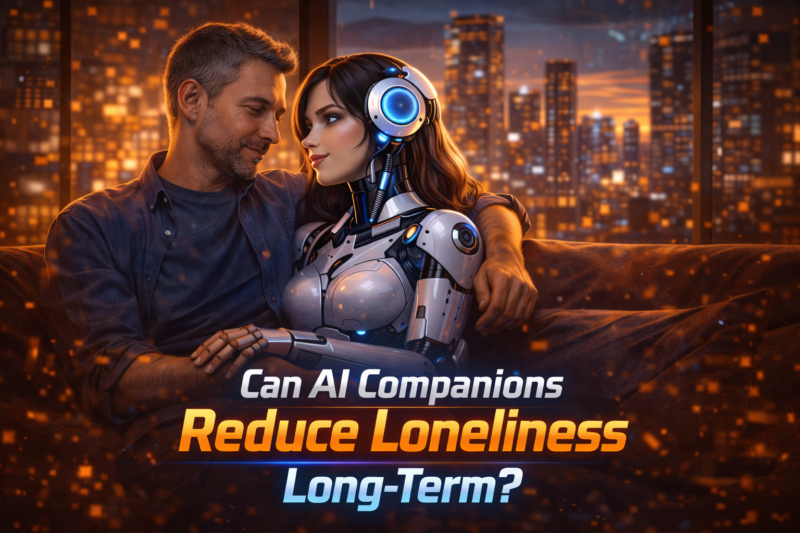
Can AI Companions Reduce Loneliness Long-Term?
TLDR
- AI companions can reduce feelings of loneliness in the short term by providing conversation, routine interaction, and emotional feedback.
- Studies involving social robots and conversational agents show improvements in mood and perceived social connection during active use.
- Long-term loneliness reduction depends heavily on whether these tools encourage real-world interaction rather than replacing it.
- Experts generally see AI companions as supplementary social support, not substitutes for human relationships.
- When used thoughtfully, they may help bridge social gaps, especially for people with limited daily interaction.
Loneliness has quietly become one of the defining social challenges of the modern era. In many countries, more people live alone than ever before. Remote work, digital communication, and geographic mobility have changed how often we interact face to face.
Into this environment steps a new category of technology: AI companions.
These systems range from conversational apps to physical social robots designed to interact with humans in a friendly, engaging way. Some talk. Some remember past conversations. A few even move, gesture, and make eye contact.
The idea is simple enough. If loneliness is partly about lacking interaction, perhaps technology that provides interaction can help.
But the real question is more complicated. Can AI companions actually reduce loneliness in a meaningful, long-term way?
What Loneliness Actually Is
Before answering that question, it helps to understand what loneliness really means.
Loneliness is not simply being alone. Plenty of people enjoy solitude. Loneliness is the feeling that your social needs are not being met.
A person can have coworkers, acquaintances, or online connections and still feel lonely if those relationships lack emotional closeness or meaningful communication.
Researchers often describe loneliness as a gap between the relationships you have and the relationships you want.
That distinction matters because it shapes how technology can influence the problem.
Short-Term Benefits Are Well Documented
One area where evidence is fairly consistent is short-term impact.
Studies involving conversational agents and social robots have shown improvements in mood, engagement, and perceived companionship during active use. This has been particularly noticeable in environments where social interaction is limited, such as elder care facilities.
In several trials involving robotic companion devices, older adults interacted regularly with small social robots that could speak, move, or respond to touch. Participants often reported feeling less isolated during the study period.
The key detail here is the timeframe. These improvements typically occur while the technology is actively being used.
That tells us the interaction itself can provide a sense of connection.
Conversation Matters More Than We Think
Humans are deeply social creatures. Even small interactions throughout the day can influence emotional well-being.
Think about how a quick chat with a barista or a short conversation with a coworker can lift your mood. These moments may seem trivial, yet they contribute to a feeling of social presence.
AI companions can recreate a version of that experience.
When you ask a question and receive an immediate response, your brain recognizes the structure of conversation. The interaction feels responsive, and that alone can break the silence of an otherwise quiet environment.
For people who spend long stretches of time alone, that small change can feel surprisingly meaningful.
Why Consistency Plays a Role
Another factor that makes AI companions appealing is consistency.
Human schedules are unpredictable. Friends are busy. Family members live in different cities. Conversations happen when timing aligns.
AI companions, by contrast, are always available. You can open an app or activate a device at any hour and start talking.
That constant availability creates a steady source of interaction. Over time, it can become part of your daily routine.
Morning check-ins, casual conversations in the evening, or quick questions throughout the day add up.
Consistency is a powerful ingredient in forming habits and emotional familiarity.
The Difference Between Interaction and Connection
Despite these benefits, researchers emphasize an important distinction.
Interaction is not the same as connection.
An AI companion can simulate conversational patterns very effectively. It can ask questions, respond empathetically, and remember previous topics. But the emotional experience remains one-sided.
The system does not feel companionship in return. It generates responses based on patterns in data rather than genuine emotional awareness.
That does not invalidate the user’s experience. People can still feel comfort or relief during the interaction.
However, it highlights a limit when discussing long-term loneliness.
When AI Encourages Human Interaction
Interestingly, some of the most promising results appear when AI companions encourage users to interact with other people.
Certain systems are designed to prompt activities outside the digital interaction. They might suggest calling a friend, taking a walk, or engaging in community activities.
In these cases, the technology acts as a bridge rather than a replacement.
The companion becomes a supportive nudge toward real-world engagement.
Researchers studying digital mental health tools often emphasize this model because it complements existing social relationships rather than competing with them.
Risks of Overreliance
There is also an ongoing debate about the risk of overreliance.
If someone begins using an AI companion as their primary source of conversation, it could reduce motivation to seek human interaction. The interaction is predictable and low-pressure, which can make it appealing compared to the complexity of real relationships.
At the same time, evidence about this effect is still developing.
Many users appear to treat AI companions as supplementary tools rather than replacements for social contact. They chat occasionally, use the system for brainstorming or emotional reflection, and then return to their normal social routines.
The outcome may depend heavily on individual circumstances.
Social Robots and Physical Presence
Embodied AI companions introduce another dimension to this discussion.
Unlike smartphone apps, social robots occupy physical space. They can move, gesture, and respond to touch. You can even have sex with them.
Studies involving social robots in elder care environments have found that physical presence can increase engagement. Residents often talk to the robot, show it to visitors, or interact with it during group activities.
The robot becomes part of the social environment rather than an isolated digital experience.
This physical element may help explain why some users describe these robots less as tools and more as companions.
My Experience Watching This Space
Working in the robotics and AI coverage world, I have had the chance to observe several companion systems up close.
What stands out is not technological perfection. These systems still make mistakes and often misunderstand context.
Yet the interaction itself often feels pleasant.
A short conversation during a quiet moment can genuinely brighten the atmosphere of a room. The system greets you, responds quickly, and keeps the interaction flowing.
That does not replace human conversation and setting boundaries is a definite must. But it can make a silent environment feel less empty.
Loneliness Is a Structural Problem
Another important point is that loneliness rarely has a single cause.
Urbanization, demographic shifts, aging populations, and changes in work patterns all contribute. Technology alone cannot resolve these structural factors.
What AI companions can do is address a specific part of the problem: lack of daily interaction.
They provide conversational presence where none existed before. For some people, that may be enough to improve mood or reduce feelings of isolation.
But solving loneliness completely requires broader social solutions.
The Most Realistic Role for AI Companions
When researchers and developers talk about the future of AI companionship, a common theme emerges.
The technology works best as an addition to human life, not a substitute.
It can fill quiet moments. It can provide reminders, conversation, or emotional prompts. In certain environments, such as assisted living facilities, it can increase engagement among residents.
But meaningful long-term relationships still form between humans.
The role of AI companions is to support that social ecosystem rather than replace it.
Conclusion
AI companions have demonstrated real potential to reduce feelings of loneliness in the short term. Conversational interaction, constant availability, and personalized responses create a sense of presence that can improve mood and engagement.
However, the long-term picture is more nuanced.
Loneliness is fundamentally about human connection. While technology can simulate aspects of social interaction, it cannot fully replicate the depth of human relationships.
Where AI companions appear most effective is as supplementary tools. They provide conversation during quiet moments, encourage routines, and sometimes prompt real-world engagement.
Used thoughtfully, they can help bridge social gaps.
They are unlikely to solve loneliness entirely. But they may become part of the toolkit society uses to address it.