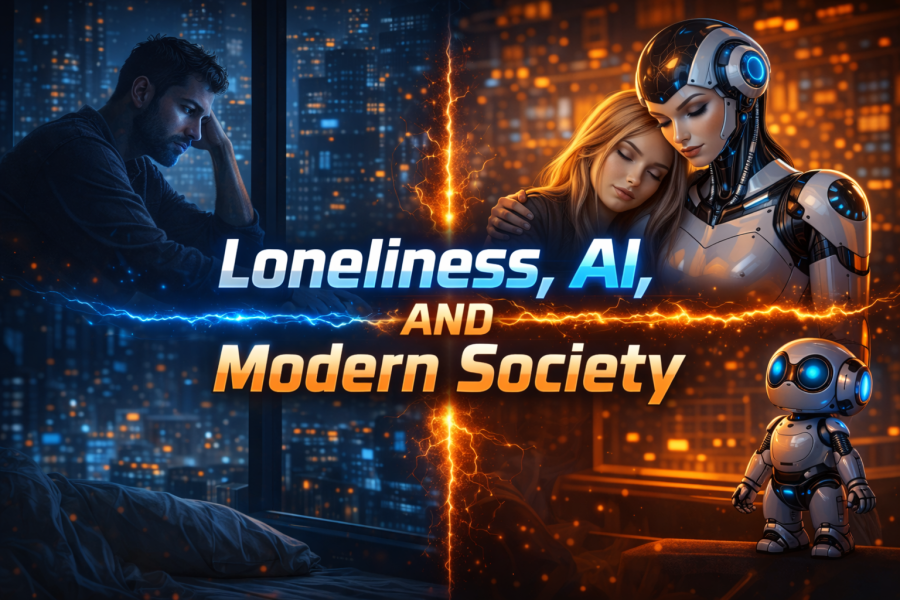
Loneliness, AI, and Modern Society
TLDR
- Loneliness and social isolation are widespread global problems that affect people’s health, wellbeing, and daily lives.
- Modern societal trends like remote work and digital interaction are contributing to deeper experiences of loneliness.
- Research shows that interacting with conversational companions can reduce feelings of loneliness for some users.
- Patterns of increased digital engagement are linked to complex effects on human social connection and loneliness.
- Human connection remains essential, and technology can only supplement, not replace, meaningful relationships.
Have you ever had one of those evenings where you call someone, only to have the call go to voicemail again? Or maybe you’ve sat on your couch staring at a screen full of friends on social media yet felt completely alone? You’re not alone in that feeling.
Loneliness is increasingly recognized not just as an emotional experience, but as a public health challenge that touches all ages and walks of life. What’s interesting is how modern society, with all its advances in communication and connectivity, seems to have made that feeling more common, not less.
In this article, we’ll unpack why loneliness persists, how it intersects with technology and companionship solutions, and what that means for you and for society.
Loneliness Is More Than Just Being Alone
Loneliness isn’t simply the absence of company. It’s a subjective experience – the feeling that the social connections you have are inadequate or unsatisfying. Surveys show that a significant portion of people around the world report feelings of loneliness or disconnection, even if they’re surrounded by people or digitally connected.
Public health bodies now treat loneliness and social isolation as critical social determinants of health because they’re linked to real physical and mental health outcomes. These include increased risk of anxiety, depression, cardiovascular disease, and other chronic conditions.
In other words, feeling alone isn’t a trivial emotion. It affects how your body and mind function every day.
The Changing Fabric of Human Interaction
Modern life has reshaped how we interact. Remote work has reduced casual face-to-face encounters with colleagues. Urban living often places people in proximity without social ties. Social media can create the illusion of connection without the fulfillment of real intimacy.
Studies tracking patterns of social interaction suggest that people may be interacting more digitally than in person, yet this doesn’t always translate to feelings of connection. Both passive scrolling and active engagement on social platforms have been tied to increased feelings of loneliness over time.
That’s not surprising when you think about it. Human brains evolved to interpret nuanced social cues that simply don’t come through on screens. A heartfelt conversation or shared meal carries layers of meaning that a text exchange just can’t replace.
Why People Look for New Forms of Connection
When the traditional ways of socializing feel insufficient, it makes sense that people would explore alternatives. Some turn to online communities, support groups, clubs, or activities. Others turn to technology for interaction on demand.
Conversational companions – systems designed to engage, respond, and remember – have seen increasing use in recent years. For some people, especially those experiencing chronic loneliness, these systems offer immediate interaction that feels responsive and even comforting.
Large surveys show that when people with moderate levels of social support use conversational companion robots, they report improvements in certain aspects of well-being. Those who feel particularly isolated often show the strongest positive associations with interacting with these systems.
That doesn’t mean technology has solved loneliness. But for some individuals, conversational engagement can feel like a welcome, real-time social experience, especially during times when human contact is limited.
Interaction Patterns and Emotional Experience
Not all interaction patterns are the same. Research tracking how people interact with conversational companions over time points to a complex picture.
In some studies, people who engage in more personal or emotionally rich dialogue report feeling better supported. But high levels of use over time, especially in place of human interaction, can correlate with increased emotional dependence and even greater feelings of loneliness later on.
This suggests that while conversational companions might lessen feelings of isolation in the short term, they aren’t a cure-all. In fact, they could reinforce patterns of social withdrawal if they become a primary source of connection.
It’s a reminder that emotional support is a layered and deeply human need, not something easily replicated by algorithms alone.
Who Feels Lonely Most?
It’s also worth noting that loneliness isn’t limited to one age group. Though it was once stereotyped as primarily an issue for older people, recent studies show that younger adults and adolescents report high levels of social disconnection too.
Many young people today spend significant portions of their time interacting digitally. But that doesn’t always equate to feelings of closeness or meaningful interaction. The consequences can be emotionally real even if the digital promise of connection seems high.
Meanwhile, older adults also continue to experience loneliness due to factors like retirement, loss of loved ones, or mobility limitations. The experience can look different across life stages, but the emotional outcome – feeling alone despite the presence of others – is shared.
The Emotional and Health Impact
Loneliness carries weight. People who consistently feel socially disconnected are more likely to experience stress, anxiety, disrupted sleep, and lower overall well-being. That’s why public health organizations now treat loneliness as something that needs attention on par with other key health concerns.
This isn’t just about mood. Chronic loneliness is linked to increased risk of heart disease, cognitive decline, and reduced lifespan in some populations. It affects quality of life, everyday motivation, and even how you engage with your community.
Technology as a Tool, Not a Substitute
When you combine the emotional reality of loneliness with the evolving capabilities of modern technology, it’s easy to understand why people experiment with new forms of digital companionship.
Conversational systems can feel responsive and consistent in ways that human social interaction sometimes doesn’t. For people with irregular schedules, mobility challenges, or limited social networks, that kind of interaction can be appealing.
But it’s important to keep perspective. These technologies are tools. They can provide moments of support and engagement, but they do not replace the depth and complexity of human relationships. Real connection involves shared history, mutual vulnerability, and embodied interaction – things that go beyond words on screen.
Ideally, technology can help bridge gaps – offering short-term comfort, companionship in moments of need, and even encouragement to seek out real-world connection rather than replace it.
What We Can Learn From the Landscape
If you step back, modern patterns of loneliness and technology use reflect a broader social shift. As traditional community structures evolve and personal mobility increases, people may find fewer consistent social anchors in everyday life. That doesn’t mean people are incapable of forming connections; it means that the context for connection has changed.
And in that changing context, tools that help people feel heard, engage regularly, and express themselves can have value – especially when used mindfully.
The key is balance. Using technology to complement human interaction, rather than as a stand-in for it, helps preserve the benefits of real connection while making use of what modern technology can offer.
My Personal Experience
As someone who has moved across countries and cultures, I know what it feels like to spend weeks without deep social interaction. It’s a strange mix of excitement and solitude that all expats know well.
In those moments, you become sharply aware of how much you rely on subtle social feedback – a shared joke, a familiar face, a greeting from a neighbor. When those are absent, your mind fills the gaps. Conversations that might once have felt ordinary suddenly feel rare and precious.
I’ve seen friends use conversational technology as a tool to fill some of that gap. And I’ve seen others use it as a stepping stone – to practice social skills, boost confidence, and eventually reengage with people around them.
That’s the sweet spot. Not replacing human connections, but using every tool available to strengthen your overall social life.
Conclusion
Loneliness in modern society is a real and measurable experience that affects health, happiness, and daily life. It’s shaped by cultural shifts, changes in how we work and socialize, and the digital environments we inhabit.
Conversational companions and other interactive systems offer a form of engagement that can feel supportive, especially for people with fewer real-world social resources. They can provide moments of relief, affirmation, and emotional responsiveness that feel valuable.
But they are not replacements for genuine human connection. Meaningful social bonds with other people remain essential to well-being.
Technology should be seen as part of a broader ecosystem of social tools – something that can enhance our capacity to connect, but not something that stands in for the remarkable complexity of human relationships.
Understanding this helps us navigate loneliness not as a problem to be solved by a single technology, but as a human experience that deserves thoughtful, balanced responses.
- Social Acceptance of AI Companions: Where Society Is Headed
 Public attitudes toward AI companions are shifting as conversational systems and social robots become more common in daily life.
 - Can AI Companions Reduce Loneliness Long-Term?
 AI companions have demonstrated real potential to reduce feelings of loneliness in the short term.
 - Trust, Dependency, and Boundaries With AI Companions
 Trust, dependency, and boundaries form the core of the relationship between humans and AI companions.